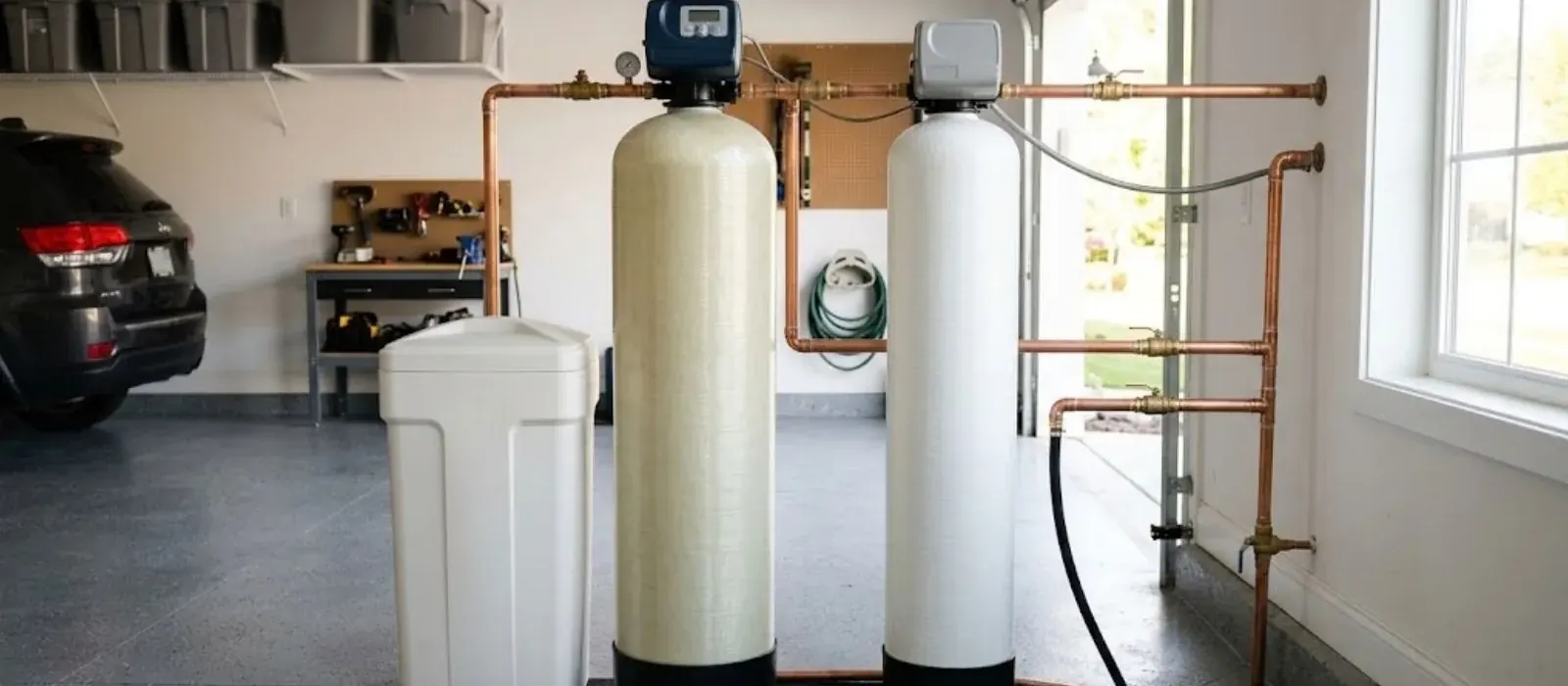
Water Softener and Filtration in Loma Linda, CA
Water softeners, whole-house and under-sink filters sized to your tap in Loma Linda, starting with a test instead of a sales pitch.
Water Softener and Filtration help, day or night
White crust, spotty dishes, dry skin: is it the water?
Those are the classic signs of hard water, which is water carrying dissolved calcium and magnesium that leave scale behind when it dries or heats. A water softener is a tank-style unit that swaps those minerals for sodium or potassium as water passes through, so the scale does not form. A filter is a different tool. It removes things such as chlorine taste, sediment or specific contaminants, and it does not soften water by itself.
Before buying either, find out which problem you actually have. Crust on faucets and showerheads, a film on glass, soap that will not lather, and a water heater that rumbles all point to hardness. A chlorine smell, floating grit or a metallic taste point to filtration. Many homes have a bit of both.
What the city's water report says about hardness, and what it does not
Loma Linda's water comes entirely from city-owned wells in the Bunker Hill Basin, and the city disinfects it with chlorine. Hardness is not one steady number here because it varies by well. The city's 2025 water quality report lists hardness on two separate lines that do not match.
| Where in the report | Average | Range |
|---|---|---|
| Unregulated substances table | about 78 ppm | about 8 to 200 ppm |
| Additional monitoring section | about 242 ppm | 130 to 330 ppm |
The report does not say what the second line represents, so treat neither average as your number. Test your tap with a hardness kit or a lab sample, and ask the city utility for its annual water quality report so you can read both lines yourself. The city's water questions line is (909) 799-4420.
Reading your test before you spend money
A hardness test is the first step because it tells you whether a softener makes sense and how large it must be. A reading near the low end of the city range may only need a showerhead filter and a descaling habit. A reading near the high end often calls for a softener on the main line.
Other numbers matter too. Total dissolved solids in the city's 2025 report averaged about 207 ppm, within a range of about 130 to 250 ppm, which is a measure of everything dissolved, not only hardness. Sodium is also listed, which matters if you are on a low-sodium diet, because a softener adds sodium.
Write down your results and the date, and test again if you change anything. Water from one tap can differ from a faucet on the other side of the house if the plumbing is old.
Symptoms and what usually causes them
- White or green crust on faucets, showerheads and kettle elements
- Spots and film on dishes, glass shower doors and car paint after rinsing
- Dry skin, stiff laundry and soap that feels slick or never rinses
- A water heater that rumbles or pops, which is scale on the tank floor or elements
- A chlorine smell or taste, which is a filtration question, not a hardness one
- Grit or cloudy water after a main break or repair nearby
- Low flow at fixtures with clogged aerators
Scale also shortens the life of fixtures and heaters. A tank water heater with a thick layer of scale works harder, and a tankless unit may need regular descaling, which is covered on the tankless water heater page.
Softener, filter or both: how the options compare
| Option | Best when | Trade-off |
|---|---|---|
| Salt-based whole-house softener | Test shows high hardness and you want soft water throughout | Needs salt, a drain connection and a bypass, and adds sodium |
| Non-salt conditioner | You want to reduce scale buildup but not remove minerals | Does not soften water the way a salt-based unit does |
| Whole-house carbon filter | Chlorine taste or odor at every tap | Does not soften, and the media needs replacing |
| Sediment filter | Grit, rust flakes or cloudy water | Clogs and needs regular cartridge changes |
| Under-sink drinking filter | You want better drinking and cooking water only | Treats one faucet, not the whole house |
A filter should be matched to what you want removed. Read the label for the contaminants it is rated for, and do not assume one cartridge handles everything. The city already treats its wells for arsenic and perchlorate, and its annual report lists the results, so a home filter is an extra step, not a replacement for that treatment.
How a softener or filter is installed
Installation is plumbing work, and it needs planning. The plumber chooses a spot near the water main with room for the tank, a power outlet if the unit has a control head, and a drain for the regeneration discharge. Then the water is shut off, the main line is cut, and a bypass valve set is installed so the unit can be isolated for service.
Outdoor hose bibs are often kept on untreated water to save salt. Hot and cold lines inside are supplied by the softened side. The plumber connects the drain line with an air gap, sets the hardness on the control head from your test, and flushes the system before it goes live.
Ask the Loma Linda Building and Safety Division whether your installation needs a permit, because rules vary by job. For any larger project around it, see plumbing installation for the permit and inspection steps.
Water conditioner repair, resin tanks and salt problems
Softeners fail in familiar ways. A salt bridge is a hard crust in the brine tank that stops salt from dissolving, so the unit stops softening even though the tank looks full. A stuck valve or a dead control head leaves the unit in a regeneration loop or never regenerates. A resin bed that has aged lets hardness through, and a clogged injector wastes salt.
Check the tank for a bridge first. If water is hard again, the screen shows an error, or you hear constant running water at the drain, call and describe what you see. The plumber checks the bypass, the control head, the brine line and the drain, and tells you whether repair or replacement makes more sense.
Hard water and the rest of your plumbing
Hard water leaves scale in faucet aerators, showerheads and cartridges, so the fixtures you rely on wear faster. The faucet repair page covers the common failures. Scale inside a tank heater is a related concern, and the water heater repair page covers the symptoms.
If you are in a rental, ask the landlord or manager before changing plumbing. A tenant should not connect equipment to the water main without written approval. A landlord who is considering a softener for several units should test the water at each building, since hardness can vary across the city.
Homeowners in Redlands and Colton should ask their own water utility for its annual report, because the numbers above belong to Loma Linda's system.
What softener and filter work costs, and how to get your number
- Unit type and size, set by your test and the number of people at home
- Where the unit goes, including access to the main line, a drain and power
- Pipe material at the connection point and whether a section must be replaced
- Permits, if the city asks for one
- Ongoing salt, cartridge or media changes
- Repair parts if you already own a unit
Water treatment equipment is rarely an insurance matter, because scale and wear are slow processes. Many homeowner policies cover sudden and accidental discharge but exclude leaks and wear that build up over time, so read your policy and ask your insurer if a unit leaks and damages a floor.
Want your real number for your house? Call (909) 505-3225 and you hear a clear price before any work starts.
Hard water and filtration questions
It varies by well. The city's 2025 report lists two hardness lines that do not agree, so no single number applies to every house. Test your tap and ask the city utility for its annual water quality report.
Only if your test shows hard water and you see the symptoms, such as scale, spotting and dry skin. If your complaint is chlorine taste, a carbon filter fits better than a softener.
No. A softener targets hardness. Chlorine, sediment and specific contaminants need a filter rated for them, and the label should say what it removes.
Ask the Loma Linda Building and Safety Division, because the answer depends on the job. The city says plumbing work needs its own permit.
Common causes are a salt bridge, a stuck valve, a worn resin bed or a bypass left open. Check the brine tank first and then call.
Softened water contains added sodium, so people on a low-sodium diet should ask their doctor. A separate under-sink filter can supply drinking water if you prefer.
It can reduce scale, which strains tanks and tankless units. It does not fix an old or failing heater.
Hard water or taste problem? Call to talk it through
Tell us the symptoms and what your test showed. You hear a clear price before any work starts.
Call (909) 505-3225Dispatched from Loma Linda
Crews head out from Loma Linda to the neighborhoods below and the towns around them.