Water Heater Installation in Loma Linda, CA
Planned water heater installation in Loma Linda is a scheduling job, so you can sort out size, fuel, venting and permits before the old tank gives out.
Water Heater Installation help, day or night
What a water heater installation covers
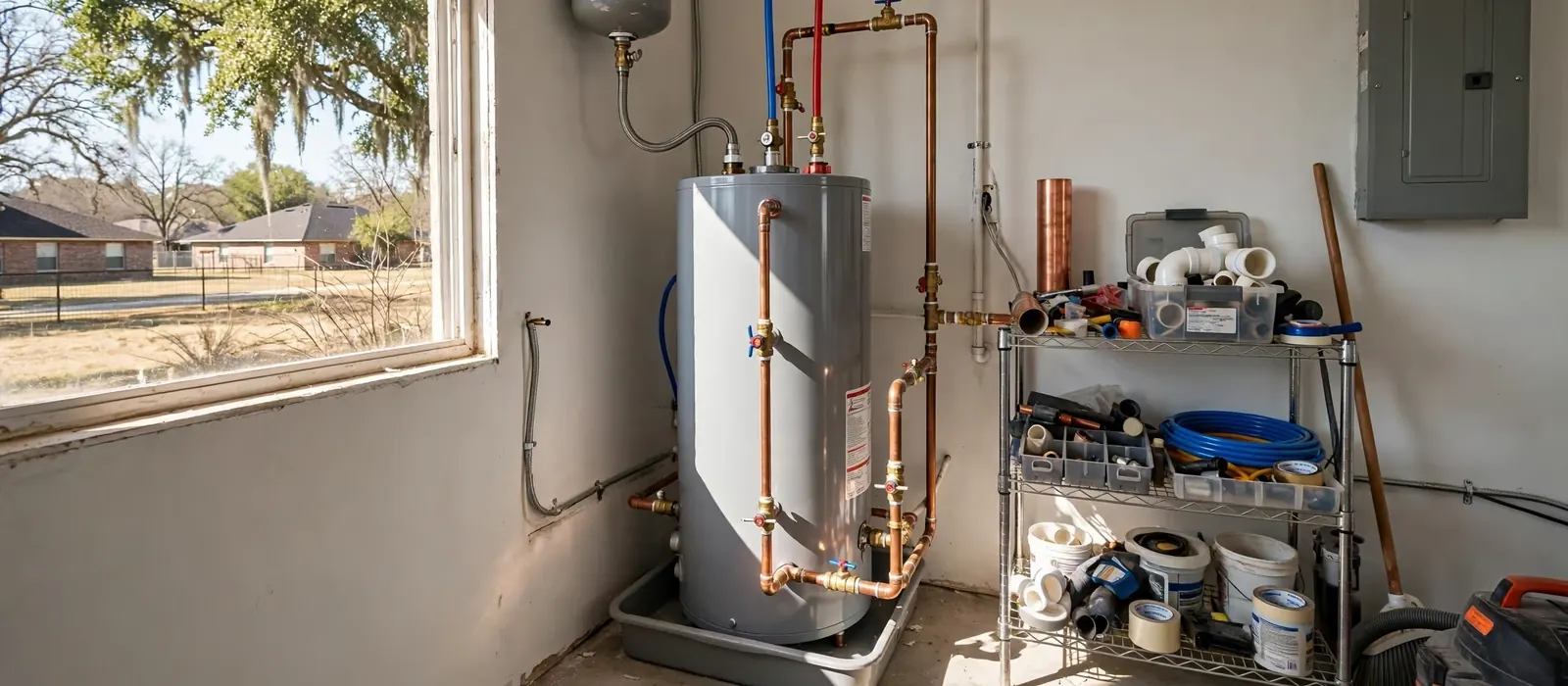
Water heater installation is the work of setting a new tank heater in place and connecting its water, fuel or power, venting and safety devices so it runs safely from the first day. It differs from an emergency swap because nothing is leaking yet. You can choose the model, check the closet and ask questions at a normal pace.
A planned install suits a new home, a remodel, a heater being moved, a switch of fuel type, or a tank you have decided to retire before it fails. If your heater is leaking right now, the water heater replacement page is where to begin, and a heater that only needs a part falls under water heater repair.
Choosing size, fuel and location
Sizing starts with the household. The number of people, the bathrooms that run at once and whether a tub or a dishwasher shares the same hours all shape how much hot water you need in a morning rush. A plumber looks at the current tank label, asks what runs out and when, and suggests a capacity from there.
Fuel comes next. A gas tank needs a gas line of the right size and a vent that carries exhaust outdoors. An electric tank needs a 240-volt circuit and a breaker with room to spare. A hybrid heat pump unit needs open air around it and a drain for condensate. Switching fuel adds work, so the plumber prices the switch separately from a same-fuel swap.
If you are weighing a wall-mounted unit with no storage tank, read about tankless water heaters before you decide.
Location matters as much as size. A heater in a hall closet needs ventilation and access. A garage unit needs protection from vehicle impact, and the maker's instructions set any other limits for a gas unit in that space. An attic unit needs a platform, a drain pan and a safe path to carry the old tank out.
The install, step by step
- Walk the site and confirm size, fuel, vent route, shutoffs and the path for hauling out the old unit.
- Shut off water and fuel or power, drain the old tank and disconnect it.
- Set the new tank on a level base with a drain pan where the manufacturer or local rules call for one.
- Connect water lines with new shutoff valves and connectors, and add an expansion tank where the system needs it.
- Connect gas or power, run the vent, and pipe the relief valve discharge to a safe point.
- Fill the tank, bleed air from the hot lines, light or energize the unit, and test the flame, draft and temperature.
- Brace the tank against earthquake movement and show you the shutoffs and controls.
Expansion tank, venting and the permit question
Three details separate a clean install from a callback. Whether you need an expansion tank depends on whether a check valve, pressure regulator or backflow device keeps pressure from flowing back to the city main. If it does, heated water has nowhere to expand, and an expansion tank gives it room. The plumber checks your setup against the California Plumbing Code and sizes the tank to your system.
Venting for a gas heater must carry combustion gases out of the home with the right slope, clearances and connections. A weak draft can push exhaust back into the room, which is why the plumber tests the draft before leaving. A gas smell at any stage has one rule. Everyone goes outside, and SoCalGas (1-800-427-2200) or 911 gets the first call, before a plumber.
Permits come down to local rules. Loma Linda's Building and Safety Division handles plumbing permits, and nothing it publishes mentions water heaters by name, so put the question to the division itself. Where a permit is needed, California expects a licensed contractor on the job regardless of size.
Codes and earthquake bracing that apply to a new heater
State law requires new and replacement residential water heaters to be braced against falling or sliding in an earthquake. The usual method is two straps on the tank, one in the upper third and one in the lower third, with the lower strap kept above the controls. The plumber sets those straps before the unit goes live.
The 2025 California Plumbing Code took effect on January 1, 2026, and an install done now falls under that edition. Section numbers can shift between editions, so ask the plumber to explain each safety device in plain terms and not by number. A good install leaves a relief valve with a discharge pipe, a shutoff within reach and a vent you can see.
Gas heater or heat pump: what the choice means in the South Coast district
Gas tank choices here are shaped by air-quality rules. SCAQMD Rule 1121 applies to gas storage heaters under 75,000 Btu per hour, so a new gas tank must be a low-NOx model. Proposed zero-NOx limits failed at the board in June 2025, which keeps gas on the table.
Heat pump water heaters are the electric alternative. The statewide TECH Clean California program lists incentives for them through participating contractors, and a Golden State Rebates page covers certain electric heat pump models replacing gas storage units. Funds have run out in the past, so check availability, because a program may be waitlisted. Do not count on a rebate until it is confirmed in writing before you buy.
Heat, old plumbing and what to check before you buy
Summers set the tone for placement. NOAA's Redlands station logs about 25 days a year of 100-degree heat or more in its 1991 to 2020 normals. A tank in an uncooled garage or attic works in hot air for much of the summer, so pick a spot with ventilation and a clear path to a drain.
For houses in the city, Census estimates for 2020 to 2024 count 42.5 percent as built before 1980. In those, ask the plumber to inspect the gas line, the shutoff valves and the supply lines near the heater location before the new unit goes on top of them. Fixing a weak connection while the work area is open costs less labor than finding it after. Installs are also scheduled for homeowners in Highland and Redlands.
| Item | What to check | Why it matters |
|---|---|---|
| Size | People, bathrooms, tub use | An undersized tank runs out and an oversized one wastes space |
| Fuel | Gas line, vent route, 240-volt circuit | Switching fuel adds lines, circuits and permit questions |
| Location | Closet, garage or attic space | Access, drainage and ventilation affect safety and servicing |
| Pressure | Check valve or backflow device | Decides whether an expansion tank is needed |
| Permit | Loma Linda Building and Safety Division | Rules vary, so ask before work starts |
Factors that set the price of an install
- Tank capacity, fuel type and how efficient the chosen model is
- Whether the existing gas line, vent, circuit and shutoffs can be reused
- Access to the install location and how hard the old unit is to remove
- Expansion tank, relief piping, drain pan and bracing that the install needs
- Permit steps and any changes to match the current plumbing code
Homeowner policies differ on water damage, with sudden events often covered and slow leaks and wear often left out. A planned install is a good moment to ask your insurer how an aging tank is rated, and to photograph the old unit before it leaves.
Curious what your own install would cost? Call (909) 505-3225 and you get a clear price on the full install before work begins.
Common questions about installing a water heater
Count the people in the home, the bathrooms that run at once and any large tubs. The plumber reads the label on your current tank, asks when you run short of hot water, and recommends a capacity that fits your household.
It depends on whether a check valve, pressure regulator or backflow device blocks pressure from returning to the city main. If it does, an expansion tank is needed. The plumber checks your system against the California Plumbing Code.
That is a question for the city. Loma Linda Building and Safety issues plumbing permits and can say whether a new tank heater triggers one. Where one is required, a licensed contractor does the work.
Gas lines, venting and electrical circuits are where mistakes become dangerous, and many jobs need a permit and a licensed contractor. If gas is ever smelled, exit the building and phone SoCalGas on 1-800-427-2200, or 911, before anything else.
Programs such as TECH Clean California and Golden State Rebates have offered incentives, but funds have been fully reserved or waitlisted at times. Check availability before buying, and ask the contractor to confirm what the program requires.
Yes, in a modest way. Redlands weather records show about 25 days a year at 100 degrees or above, so a ventilated spot is better than a sealed attic. Freezing is rare, at about 3 days a year, so insulating for cold is a smaller concern.
Ready to plan your water heater installation?
Call with your household size, current fuel and where the unit will sit. A licensed plumber walks through options and a clear price before work.
Call (909) 505-3225Dispatched from Loma Linda
Crews head out from Loma Linda to the neighborhoods below and the towns around them.