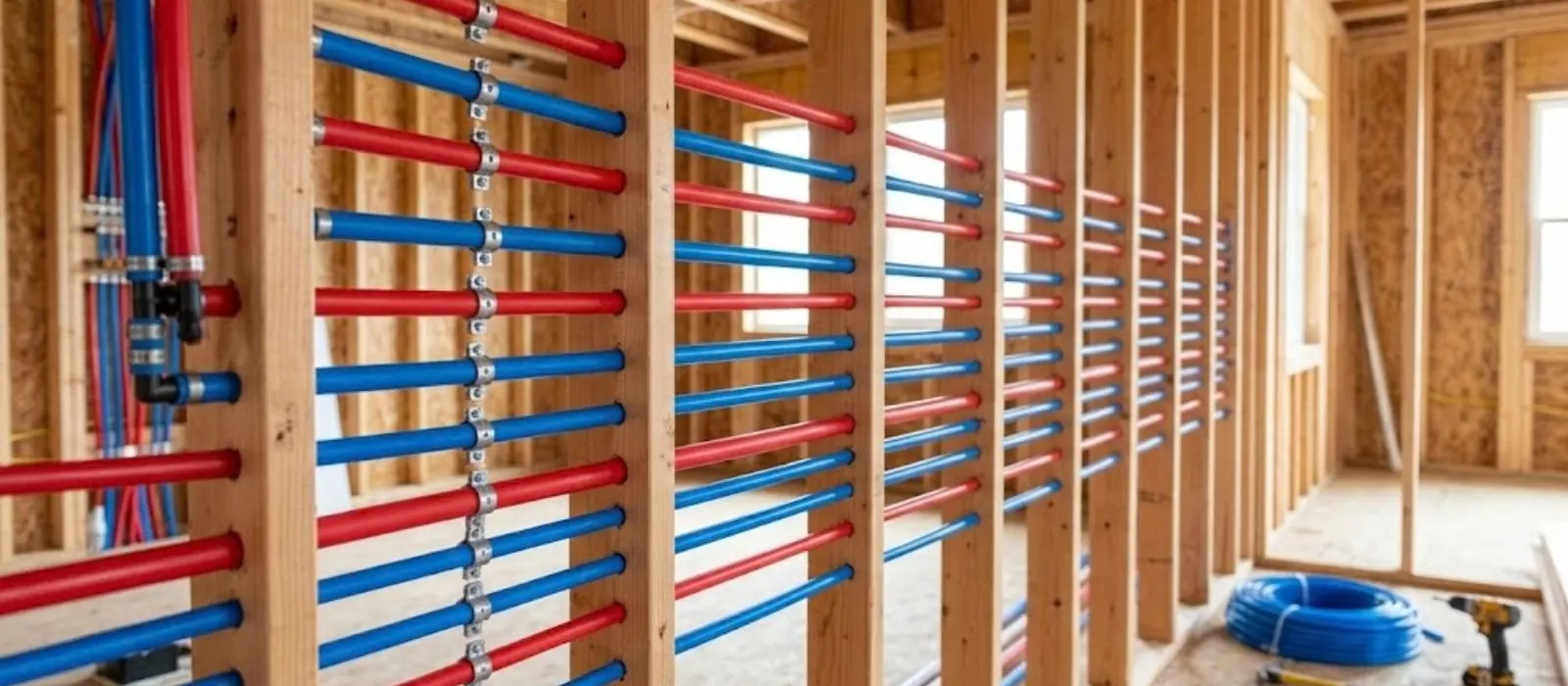
Repiping in Loma Linda, CA
Repiping swaps a worn supply system for new pipe, and in a Loma Linda house with decades of wear it can end the cycle of patching one leak after another.
Repiping help, day or night
What a whole-house repipe is, and when it makes sense
Repiping means removing the old water supply pipes in a house and installing new ones to every fixture, from the main shut-off to the faucets, toilets, and water heater. It is a planned project, not an emergency repair, and it fits best when pipes are failing in several places or the water itself has changed.
The drain and sewer lines are a separate system and are not part of a repipe. Repiping replaces only the lines that carry clean water under pressure. Most of the time the work is done through small openings in walls, ceilings, or the attic, with patching afterward.
A single leak does not mean you need a repipe. The point of this page is to help you tell the difference between one bad spot and a system that is wearing out everywhere.
Pinhole leaks, brown water, and weak pressure: is it time to repipe?
Three symptoms come up again and again when pipes reach the end of their life. Small pinhole leaks keep appearing in different spots. Water comes out brown or cloudy after sitting, especially first thing in the morning. And pressure at faucets and showers has faded, even though the city supply is fine.
Each has a plain explanation. Pinholes appear where the pipe wall has thinned. Brown water carries rust from inside corroding steel. Weak pressure is the result of mineral buildup and rust narrowing the inside of galvanized pipe until a trickle gets through.
One of these on its own deserves a look. Two or three together, plus a house of a certain age, is the pattern that makes a repipe worth pricing. A leak detection visit can show how widespread the problem is before you commit.
How old the houses are here
The Census survey puts about 42.5 percent of Loma Linda homes as built before 1980, and the median year built is 1984. That means a large share of houses have supply pipe that is 40 years old or more. Pipe that has carried water for four decades deserves a closer look.
Age alone is not a diagnosis. Some old pipe is still in fine shape, and some younger pipe fails early. What the numbers do tell you is that a plumber in Loma Linda will often find original pipe, and that asking about its material and condition before a repair is reasonable.
If your house was built in the 1970s or earlier and you are on your third or fourth leak, that is a question to raise with the plumber. If it is a 2000s build with one leak, a repair is probably the right move.
Signs the supply pipes are wearing out
- Pinhole leaks or green crust at joints on copper pipe.
- Rust-colored or cloudy water from several taps, not one.
- Pressure that has declined slowly across the house.
- Repeated repairs on the same line within a year or two.
- Water that takes a long time to run hot at the far fixtures.
- Visible rust, flaking, or blue-green stains on exposed pipe in a garage, crawlspace, or under a sink.
- Wall stains or a rising bill that point to slow leaks you have not found.
Repair or repipe: a way to decide
| Option | Best when | Trade-off |
|---|---|---|
| Spot repair | One leak, with pipe that is otherwise sound | Least work now, but the next leak may be nearby |
| Partial repipe | One zone or run is bad, such as the bathroom or kitchen line | Leaves older pipe in the rest of the house |
| Whole-house repipe | Leaks keep recurring, water quality has changed, or pressure is poor | Larger project, with wall openings and patching |
Ask what the plumber found, not only what they recommend. A good recommendation names the pipe material, the number and location of the failures, and why a smaller fix will or will not hold. If the explanation is vague, ask for specifics.
A good rule of thumb is that when you have paid for the same kind of repair twice, the third one is a signal to look at the whole system. A planned repipe lets you choose the timing, instead of being forced into it by a burst pipe repair in the middle of the night.
Pipe materials and what to ask about each
Copper is a long-used material that handles heat well and is repairable, but it can pinhole in aggressive water. PEX is flexible and can be pulled through walls with fewer openings, but it does not like sunlight and needs support. CPVC is rigid plastic, lighter than metal, and cuts easily, though you should ask how it holds up on the hot side.
The right choice depends on the house, the water, and the access. Ask the plumber why a material fits your situation, not only what it is. Ask whether the choice meets the plumbing code the city enforces, and let them explain how the parts they use are approved for drinking water.
Do not choose by price of the pipe alone. The labor of opening and patching is a large part of a repipe, so a slightly more expensive material that goes in with fewer openings can come out about even.
How a repipe goes, step by step
A repipe takes planning, and a good plan makes it far less disruptive. This is the usual order.
- A walk-through to find where the old pipes run, how many fixtures there are, and where openings will be needed.
- A written plan that names the pipe material, the scope, and the price before work starts.
- Shut-off of the water at the main, with a plan for when it will be off and when it returns.
- New lines run through walls, attic, or crawlspace, then connected at each fixture.
- Pressure testing of the new system before any wall is closed.
- Patching, and a final check of every faucet, toilet, and appliance.
You can usually stay in the house during the work, though the water is off at times, and kitchens and bathrooms are the busiest areas. Move furniture and valuables away from walls in advance.
Permits, inspection, and checking the licence
Permit rules vary, so ask the Loma Linda Building and Safety Division what applies to your repipe before work begins. Do not rely on anyone who tells you no permit question exists without asking the city.
A repipe is a large plumbing job, so confirm that the contractor is licensed. The CSLB license lookup at cslb.ca.gov shows license status and disciplinary history, and the California contractor board says workers' compensation and liability information appears on the license history. Ask for the plan, the price, and the scope in writing.
If the house is in nearby Redlands rather than Loma Linda, ask that city's building department instead, since local rules differ.
What affects the price of a repipe
- House size, number of fixtures, and how many floors the pipes run through.
- Pipe material and the fittings it needs.
- Access: open attic and crawlspace are easier than finished walls and slab.
- Wall and ceiling patching, and whether paint and texture are included.
- Permit steps and inspection, and whether any work happens outside normal hours.
Many homeowner policies cover sudden and accidental water damage, but they do not usually pay to replace pipes that are worn out. The California Department of Insurance lists wear, seepage, and leaks over time as generally not covered. If a leak has already damaged a wall or floor, photograph it and ask your insurer what applies.
Want your real number for your house? Call (909) 505-3225 and you hear a clear price before any work starts.
Repiping questions from Loma Linda homeowners
One leak on an otherwise healthy pipe is usually a repair. Several pinholes, brown water from many taps, and falling pressure together point toward a repipe. A plumber should name the material and show you where the pipe is failing.
No. A repipe replaces the supply lines that carry clean water under pressure. Drain and sewer lines are separate and are handled as their own repairs.
It involves some openings, usually small ones in walls, ceilings, or the attic, and then patching. Houses with open access in a crawlspace or attic need fewer cuts than houses with finished walls over every pipe run.
Age raises the odds. About 42.5 percent of the city's homes were built before 1980, so many have decades-old supply pipe. The median year built is 1984, and condition matters more than the date.
Permit rules vary, so ask the Loma Linda Building and Safety Division before work starts. To check that a plumber is licensed, use the CSLB license lookup at cslb.ca.gov.
Usually yes. The water is off for parts of the work, so plan for it, and keep rooms near the walls being opened clear. The plumber should tell you the schedule up front.
Call right away. The line is answered 24/7, and a burst pipe is handled as urgent while the repipe stays on your calendar.
Plan a repipe on your schedule
Call to talk through your pipes and your options. You hear a clear price before any work starts, and same-day appointments are available when the schedule allows.
Call (909) 505-3225Dispatched from Loma Linda
Crews head out from Loma Linda to the neighborhoods below and the towns around them.