Sewer Camera Inspection in Loma Linda, CA
A sewer camera inspection in Loma Linda shows the inside of your line before you buy a house, hire a dig or keep paying for the same clog.
Sewer Camera Inspection help, day or night
What a sewer camera inspection is
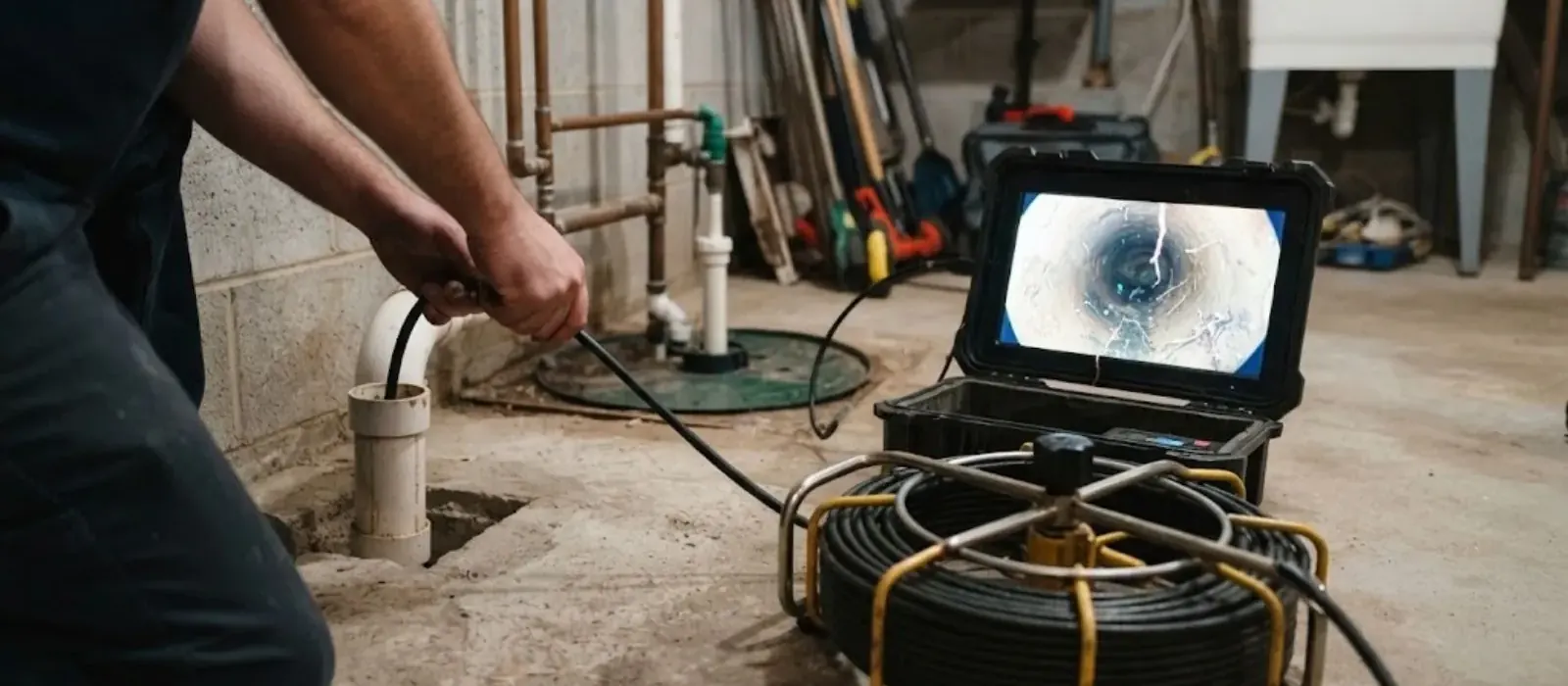
A sewer camera inspection is a visual check of the drain line that runs from your house to the street, done with a waterproof camera on a flexible rod. The plumber feeds the camera through a cleanout, a capped pipe fitting near the house, and watches live video of the pipe walls, joints and bottom. The footage shows roots, cracks, offsets, bellies, scale and debris that no one can see from the surface.
This is a planned visit, not an emergency one, and it is the starting point for most sewer decisions. It turns a guess about a clog, a smell or a soft patch in the yard into something you can look at and discuss.
What the camera can and cannot show
| Finding | What it looks like | What it means |
|---|---|---|
| Root intrusion | Fine hairs or a dense mat at a joint | An open joint is feeding the roots |
| Crack or break | A dark line, a gap or a missing section of wall | The pipe is failing and may leak into soil |
| Offset | Two pipe lengths that no longer line up | Debris will catch at the step |
| Belly | A low stretch holding water | Paper and grease settle there |
| Scale or corrosion | Rough, pitted or flaking walls | Common in older iron |
| Collapse | The pipe closed or caved in | Needs a dig or replacement |
A camera shows the inside of the pipe and the distance along it. It does not show the soil outside or any leak that is hidden, so a pressure test or a smoke test sometimes follows. A locator tuned to the camera head lets the plumber mark the spot on the ground, which is valuable before any digging begins.
Why homeowners order one
The reasons usually come from a few common situations.
- A purchase. Buying a house without seeing the sewer line means inheriting whatever it holds.
- Repeat clogs. If a line keeps stopping, the camera shows why instead of paying for the same cabling again.
- Before a repair. Footage and a measured distance turn a guess into a plan.
- After cleaning. A pass after hydro jetting confirms the wall is clean.
- A yard change. Before a patio, pool, tree or slab goes over the line, you want to know its condition.
- Slow drains in an older house. A sag or scale shows up before it becomes a backup.
None of these is urgent in the sense of water on the floor. If sewage is rising in the house, call for sewer line cleaning first and plan the camera look after the emergency.
Buying a house in Loma Linda
Census Bureau survey data shows the median Loma Linda home was built in 1984, so many sewer laterals are a few decades old. Age alone does not mean a bad pipe, but it means a camera is a quick way to find out. A seller's report on the line, if there is one, is useful, though a fresh look by a licensed plumber is better.
Footage also helps you ask the right question during a purchase. If the camera shows roots or an offset near the street connection, ask Loma Linda Public Works or the plumber to check where public and private responsibility meet before you negotiate a repair credit.
The same approach works for buyers in Redlands or Grand Terrace, where we also serve homes with older lines.
How the inspection goes
- The plumber locates the cleanout, or creates access by pulling a toilet or opening a vent if none exists.
- The camera is fed into the line slowly, with the plumber watching the monitor and noting depth and distance.
- Problem areas are marked, and a locator can pinpoint them above ground.
- The footage is saved or described so you can see it, and the plumber explains what each item means.
- You decide whether to clean, repair, line, monitor or do nothing.
A short run through an empty, flowing pipe takes less time than one through a full line. If the line is full of debris, the plumber may need to clean it first, since a camera cannot see through sludge.
Who owns the pipe, and what the camera tells the city
The City of Loma Linda owns and operates the wastewater collection system. Treatment happens under a joint powers agreement with San Bernardino. The city pages we reviewed do not state the private lateral rule, so the camera footage is a good tool for the conversation about where public and private pipe meet.
For a neighboring comparison, San Bernardino's own sewer agency tells owners there that they are responsible for the whole lateral and suggests an inspection every five to ten years and a cleanout if none exists. That guidance applies to San Bernardino, not Loma Linda, but the habit of an occasional inspection makes sense anywhere with an older line.
If the camera finds trouble, the next step is usually a sewer line repair such as lining, a spot dig or replacement, and the plumber explains which one fits the footage.
Camera work versus other ways to check
Not every symptom needs a camera, and it helps to know what else is available.
- A clean cable pass can tell a clog from a break in simple cases, but it cannot show the pipe.
- A water test, filling the line and watching, can find a leak but not where it is.
- A smoke test can show where a sewer line is open to the air, which matters for gases and venting.
- A locator marks a pipe path, which helps before digging, and it is usually done with the camera.
The camera is the one that shows condition. For most homeowners that makes it the best first step before spending on repair.
What affects the price of a sewer camera inspection
Because lines vary, a flat number over the phone would be a guess. These are the real cost factors.
- Access. A cleanout makes the visit faster.
- Length and depth of the line, and the number of bends.
- Whether the line must be cleaned first to see.
- Locating work to mark depth and position on the ground.
- The kind of report or footage you need, such as for a home purchase.
- Weekend or evening scheduling.
Homeowner policies differ. Many cover sudden and accidental damage and exclude wear and gradual leaks, and a camera report can help show what happened, so keep the footage with your insurance records. Want your real number for your house? Call (909) 505-3225 and you hear a clear price before any work starts.
Sewer camera inspection questions
A straightforward run through a clear line is usually short. A long line, many bends or heavy debris takes longer, and the plumber may need to clean first.
A cleanout is the easiest way in. Without one, the plumber can often reach the line by pulling a toilet or opening a vent, and may suggest adding a cleanout.
Yes, in most cases. A locator tuned to the camera head marks the spot above ground, and the plumber measures the distance from the cleanout.
It shows cracks, gaps and offsets that cause leaks, but not water in the soil outside. A pressure or water test can follow if a leak is suspected.
The city pages we reviewed do not say, so ask Loma Linda Public Works. The city owns and maintains the collection system, and a private plumber can inspect your own lateral.
It is a sensible step for an older home, since the median house here dates from 1984. A licensed plumber can run the camera and show you what the line looks like before you close.
They are related but different. The camera shows the inside of the pipe, and a locator finds its path from above ground. They are often done together.
Book a sewer camera look before you dig
Call to schedule a camera run. A licensed plumber explains what the footage shows and you hear a clear price before any work starts.
Call (909) 505-3225Dispatched from Loma Linda
Crews head out from Loma Linda to the neighborhoods below and the towns around them.