Emergency Sewer Line Repair in Loma Linda, CA
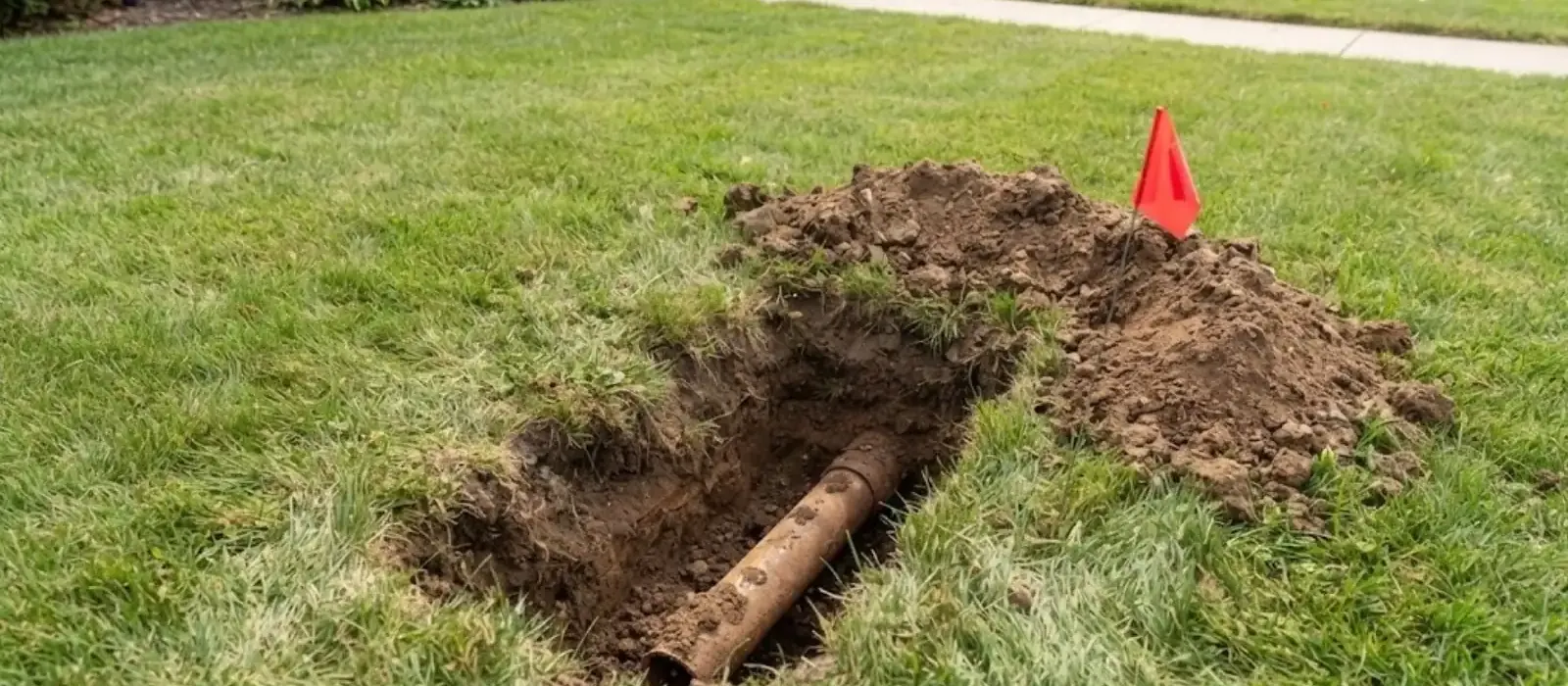
Sewer line repair in Loma Linda, from a cracked clay pipe under a front yard to a rooted joint that keeps backing up into the tub.
Sewer Line Repair help, day or night
Sewage backing up in the house? Act on this first
Sewage coming up through a floor drain, tub or toilet is an emergency, and the line is open 24/7 for it. Sewer line repair means fixing or replacing the pipe that carries wastewater from the house to the street. While you wait for a plumber, stop using every fixture, keep people and pets out of the wet area and switch off power at the panel only if you can reach it dry.
Sewage is a health hazard, not just a mess. Do not touch it barehanded, do not run a wet vacuum on it and do not hose it into the yard where children play. Open windows if the smell is strong, and wash hands with soap after any contact.
A plumber will usually clear the line first to stop the backup, then run a camera to find the reason it failed. Night and weekend backups are treated the same as daytime ones, and same-day appointments are offered when they are available.
Signs the pipe itself is failing
A clog fixes with cleaning. A broken pipe returns. These signs point to a damaged line instead of a simple blockage.
- Drains back up again within days or weeks after being cleared.
- More than one fixture gurgles or backs up at the same time, especially the lowest tub or shower.
- A sunken strip, soft patch or unusually green line shows in the yard where the pipe runs.
- Sewage smell rises near the foundation, the cleanout or a floor drain.
- Slow drains at the edges of the house while the interior seems fine.
- Mice, roaches or other pests appear near a drain, which can mean a cracked pipe.
None of these proves a break, but several together are a good reason to run a camera.
What a camera shows before anyone digs
The only reliable way to know why a sewer line fails is to look inside it. A small camera on a flexible rod goes in through the cleanout, sending live video of the pipe walls, joints and bottom. The plumber marks the depth and distance of each problem, and a locator at ground level can mark the spot above it.
The picture usually shows one of a few things. Roots entering at a joint, a crack along the pipe, an offset where two lengths no longer meet, a belly where the pipe sags and holds water, or a collapse. Each has a different repair, and each costs differently. A planned look is covered on the sewer camera inspection page, and most repair estimates begin with that footage.
How a failing sewer line shows up in Loma Linda homes
Census Bureau survey data shows that 42.5 percent of Loma Linda homes were built before 1980, and the median home dates from 1984. That mix means plenty of older clay, cast iron and early plastic between houses and the street, plus newer pipe in recent tracts. A line that is forty or fifty years old is a realistic candidate for cracks and open joints.
The City of Loma Linda owns and maintains the wastewater collection system, and treatment happens through a joint powers agreement with the City of San Bernardino. Who owns the pipe between your property line and the main is worth confirming, so ask Loma Linda Public Works or the plumber who comes out to check where public and private responsibility meet. That conversation should happen before you approve a dig in the street or parkway.
If the failure is at the connection to the city main, the repair may involve both the owner and the city. The camera footage and a measured distance from the cleanout make that conversation much clearer.
Repair choices and their trade-offs
| Option | Best when | Trade-off |
|---|---|---|
| Spot repair (dig and replace a section) | One short break or offset in a reachable spot | Needs a trench, and the rest of the old pipe stays old |
| Pipe lining (cured-in-place) | Cracks, root entry and worn walls, but the pipe is still round | Needs a pipe that has not collapsed, and slightly reduces inside diameter |
| Pipe bursting | A long run is badly broken and a trenchless replacement is possible | Needs entry and exit pits, and nearby utilities limit it |
| Full open-trench replacement | A collapse, a deep belly or a pipe with many failures | Most disruption to the yard, driveway or landscaping |
The honest answer to which one is best is that the camera decides. A short break in a front yard is often a spot dig. A long run of cracks under a driveway is where trenchless starts to earn its place.
Pipe lining and other trenchless methods
Pipe lining, also called cured-in-place pipe, is a trenchless repair. A felt tube soaked in resin is pulled or inverted into the old pipe, inflated against the walls and cured with heat, light or hot water until it hardens into a new pipe inside the old one. The result seals cracks and blocks roots at the joints, and it needs only small access holes instead of a long trench.
Lining works best when the host pipe still holds its round shape. It does not rescue a collapsed section, a bad offset or a deep belly, and it reduces the inside diameter slightly. The plumber cleans the pipe first, often with hydro jetting, so the liner bonds to a clean wall. Clearing a repeat backup before the repair is also what sewer line cleaning covers.
Pipe bursting is the other trenchless route. A bursting head is pulled through the old pipe, breaks it outward and drags a new plastic pipe in behind it. It suits a long run where lining cannot work, but it needs digging at both ends and clear space for the equipment.
Trenchless does not mean no digging at all, and it does not mean no permit is needed. Ask the plumber exactly what holes are needed and where, and ask about permits before you agree.
Cast iron pipe repair
Cast iron was widely used for house drains in older homes, and it ages in a predictable way. The inside wall corrodes and builds up scale, the pipe thins and eventually cracks along the bottom where water sits. It can look sound outside while being rough or nearly closed inside.
A cast iron section can be cleaned and relined, replaced with plastic pipe or joined to a newer line with a transition coupling. The right choice depends on how much of the pipe is bad. If only a few feet are cracked, a section swap works. If the camera shows scale and pitting across the whole run, lining or full replacement is likely.
Be cautious about a plumber who says an old iron line needs to be dug up without showing you footage. The camera tells you which kind of iron problem you actually have.
Permits, licensing and who may do the work
Digging up a sewer line is regulated work. The City of Loma Linda's building FAQ says plumbing work needs its own permit, and pipes buried below grade must be inspected before they are covered. The city's pages do not name sewer repair specifically, so ask the Loma Linda Building and Safety Division what applies to your job.
California's contractor board says a licence is required when a project needs a building permit, whatever the cost. The California Contractors State License Board has a public lookup where you can check any plumber's licence status and complaint disclosure. Check it before you sign. A dig in the street or parkway may carry extra rules of its own.
A short, honest note on septic
Loma Linda homes are on the city sewer, and the city runs the collection system. Septic tanks apply only to a property that is off the sewer, which is unusual here. If you have a septic system, San Bernardino County Environmental Health Services handles septic permits and rules, and we are not promising septic tank work on this page.
If you are not sure whether your house connects to the city sewer, the camera and the cleanout location usually answer that. Ask Loma Linda Public Works if the plumber cannot tell. Neighbors in Redlands or Highland call us for the same repairs, and the process is the same there.
What shapes the cost of a sewer line repair
No honest plumber can name a number without seeing the pipe. These are the factors that move it.
- Depth and length of the damaged section.
- Pipe material and the method chosen: spot dig, lining, bursting or open trench.
- What sits on top of the line: lawn, concrete, a driveway or a tree.
- Permits, inspections and any work in the public right-of-way.
- After-hours timing for the emergency stage of the job.
- Reconnecting to fixtures, cleanouts and the street connection.
Many homeowner policies cover sudden and accidental discharge and exclude gradual leaks, root damage and wear, so ask your insurer and photograph the damage before cleanup. Want your real number for your house? Call (909) 505-3225 and you hear a clear price before any work starts.
Sewer line repair questions
Yes. The line is answered 24/7, including nights, weekends and holidays. A licensed plumber can come out the same day when available to stop a sewage backup, then run a camera to find the break and plan the repair.
A clog usually clears and stays clear for a while. A broken line returns quickly, and several fixtures back up together. A camera inspection settles the question by showing the pipe wall.
It depends on the pipe. Lining and bursting save the lawn or driveway, but they need a pipe that can be lined or a route for the bursting head. A collapse or deep belly usually needs a dig.
The City of Loma Linda owns and maintains the collection system. Where public and private responsibility meet should be confirmed, so ask Loma Linda Public Works or the plumber to check before you pay.
Permit rules vary, so ask the Loma Linda Building and Safety Division. The city says plumbing work needs its own permit and buried pipe must be inspected before it is covered.
Septic only applies to a property off the city sewer. County Environmental Health Services handles septic systems, and this page does not promise septic work.
Policies differ. Many cover sudden and accidental damage and exclude gradual leaks and wear, so read your policy and ask your insurer before work begins. The plumber who comes out can describe what the camera found in plain terms.
Sewer line failing? Call for a repair plan
We answer day and night, same-day when available. A licensed plumber finds the break and gives a clear price before any digging or lining starts.
Call (909) 505-3225Dispatched from Loma Linda
Crews head out from Loma Linda to the neighborhoods below and the towns around them.