Emergency Toilet Repair in Loma Linda, CA
Overflowing, rocking or running toilets repaired in Loma Linda homes and rentals, day or night, with a clear price before the work starts.
Toilet Repair help, day or night
Toilet overflowing right now? What to do in the first three minutes
A toilet that is overflowing or leaking onto the floor is an emergency, and the line for toilet repair is open 24/7. A toilet is a gravity-fed bowl and trap that empties into the drain when the tank dumps its water, so most floods trace back to a blocked trap or a stuck fill valve. While you wait, shut off the small supply valve behind the bowl by turning it clockwise until it stops.
- Close the supply valve behind the toilet. If the handle spins loosely or will not move, close the main house valve instead.
- Keep people and pets out of the wet bathroom. If water is reaching outlets, a lamp base or a floor heater, stay out and switch the bathroom breaker off only if you can reach the panel on dry floor.
- Do not flush again to test it. Every flush adds a full tank to a bowl that is already over the rim.
Towels along the door edge slow water heading for carpet or the hallway. Call as soon as the water is under control. Nights, weekends and holidays are handled the same way as a weekday morning, and same-day appointments are offered when available.
The tank and bowl parts that fail, and what each failure looks like
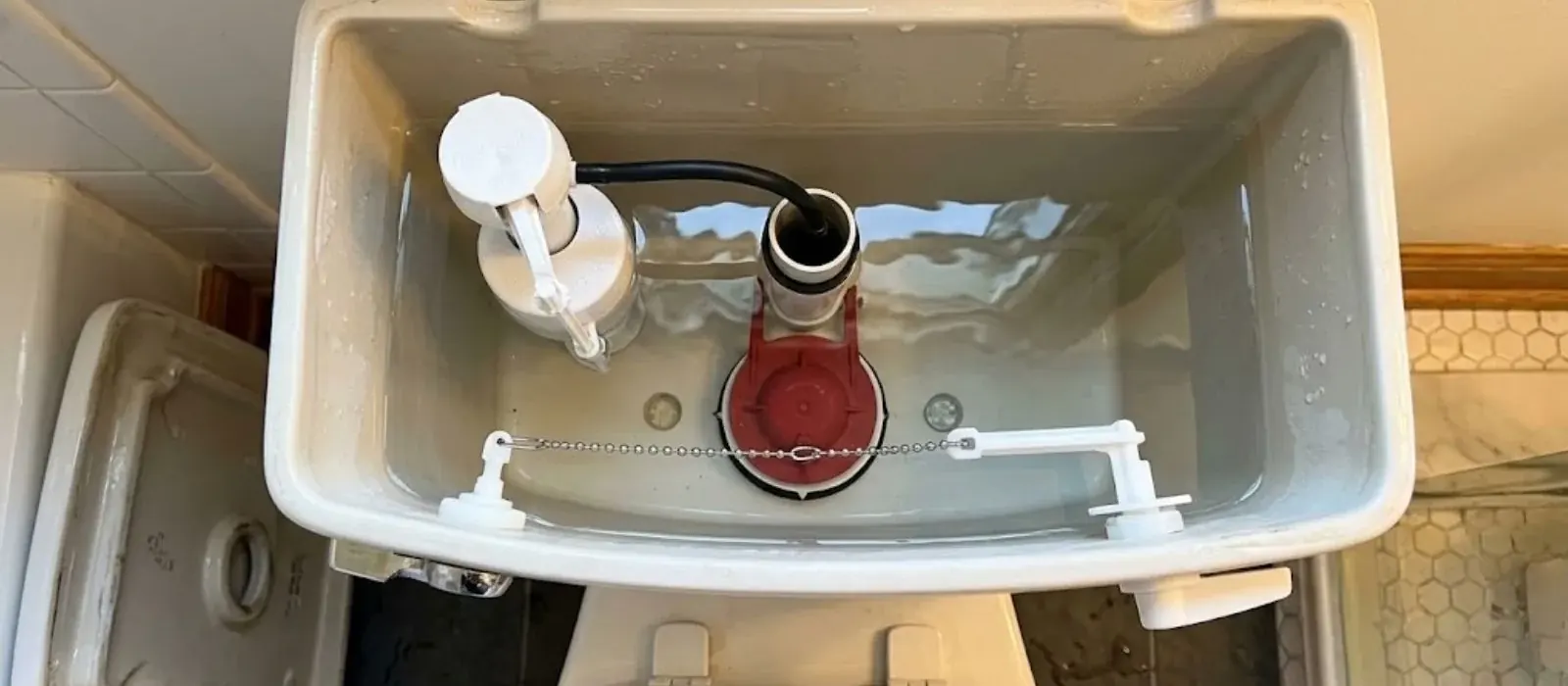
Most toilet calls come down to a short list of parts. The flapper is the rubber seal at the bottom of the tank. When it warps, the tank slowly drains into the bowl and the fill valve restarts every few minutes, which is the ghost flush you hear from another room. A fill valve that does not shut off sends water down the overflow tube and, on a bad day, over the rim of the bowl.
A rocking toilet points at the floor flange or the closet bolts. The wax ring under the bowl is the seal between the toilet and the drain pipe. If it fails, you get a damp patch around the base, a sewage smell, or a soft spot in the floor. The plumber who comes out lifts the toilet, checks the flange for cracks or a loose fit, and sets a new seal before the bowl goes back down.
A bowl that fills and empties slowly usually has a partial clog in the trap or the drain behind it. If one toilet is slow and nothing else is, a closet auger often reaches the blockage. If several fixtures slow down together, the problem is further down the line and a drain cleaning visit is the better next step.
Signs your toilet needs attention before it floods
- Water runs in the tank for minutes after a flush, or the tank refills on its own
- A damp ring, stain or soft floor around the base of the bowl
- The bowl rocks when you sit or lean on it
- The handle must be held down, jiggled or lifted to finish a flush
- Water seeps from the tank bolts, the supply line or the shutoff valve
- A gurgle in the toilet when a washer or shower drains elsewhere in the house
- A faint sewer smell in the bathroom that does not fade after cleaning
Any two of these together deserve a call. A toilet that leaks at the base can rot the subfloor in a way that is invisible from above, and a supply line with a corroded nut can let go without much warning.
Older pipes and older fixtures in Loma Linda homes
About 42.5 percent of Loma Linda homes were built before 1980, and the median year built is 1984, so many toilets here sit on flanges and drain stubs that are decades old. In an older house, a toilet that clogs again and again is worth a look at the drain line and the flange, not only the bowl.
Some toilets are older than they look. A bowl swapped in the 1990s may use well over the amount of water that California-compliant 1.28 gallon per flush models use, so replacing it can be a sensible choice when the fixture is cracked, stained inside the trap or constantly repaired.
Repair or replace, side by side
| Option | Best when | Trade-off |
|---|---|---|
| Replace the flapper and fill valve | The tank runs, hisses or refills on its own | Fixes the tank only. A cracked bowl or leaking base is a separate problem |
| Reset the toilet with a new wax ring and bolts | The bowl rocks or the base is damp | The floor must be dry and solid. A soft floor means more repair |
| Clear the trap with an auger | One toilet is slow or blocked | Does not help if the blockage is in the main drain |
| Replace the toilet | The bowl is cracked, the glaze is worn or repairs keep coming back | New fixture, plus a fresh flange check and a new supply line |
| Add a new shutoff valve | The valve behind the bowl is stuck, corroded or drips | The house water may need to be shut off briefly |
If replacement makes sense, the new fixture should be a 1.28 gallon per flush model, and the seat height, rough-in distance and bowl shape should match the bathroom. A chair-height bowl, for instance, is a good fit for older residents but is a different bowl than the one you have now.
Toilet install and replacement, step by step
A toilet replacement is a planned job even when the old one died suddenly. The plumber who comes out confirms the rough-in distance from the wall to the flange bolts, checks the flange for cracks and level, and decides whether the supply line and shutoff valve should be renewed at the same time. Reusing a brittle line saves a few minutes and risks a flood later.
Then the old bowl is lifted, the flange area is cleaned, a new wax seal or a rubber seal is seated, and the new bowl is set and tightened evenly on the bolts. The tank is mounted, the line is connected, and the toilet is flushed several times while the base and every joint are watched for seeps.
New fixtures in a remodel or an addition follow the larger rules for planned work. See the plumbing installation page for how permits and inspections fit a bathroom project. Homeowners in Redlands and Colton next door use the same line.
A toilet that runs or leaks quietly all day
A running toilet is usually not an emergency, but it is an expensive habit. A flapper that leaks lets a thin stream go down the drain all day. To check, add a few drops of food coloring to the tank and wait twenty minutes without flushing. If color shows up in the bowl, the flapper or flush valve seat is leaking.
If the tank is dry and you still see wet floors, water stains below the bathroom, or a bill that jumped for no clear reason, the leak may be in a supply line or behind the wall. A leak detection visit uses moisture meters and listening gear to find it without opening the wall first.
Renters, landlords and a toilet that will not flush
Roughly 62 percent of Loma Linda households rent, so a large share of toilet calls come from tenants and the people who manage the buildings. A toilet that will not flush is a habitability issue, because California Civil Code 1941.1 lists plumbing in good working order and hot and cold running water to the fixtures among the basic requirements of a rental dwelling.
If you are a tenant, tell the landlord or property manager first, in writing, and ask which plumber they want you to let in. If you are the landlord, a same-day call keeps a small flange leak from turning into a ruined unit below. Photograph the water, the floor and the fixture before anything is moved. This is general information, not legal advice.
Night and weekend toilet calls
A toilet does not choose business hours. Overflows happen after a party, on a holiday, or at two in the morning when the fill valve fails. The line answers around the clock, and after-hours calls get the same plain explanation of what is wrong and a clear price before work starts.
Most weekend toilet repairs are part swaps such as a flapper, fill valve, supply line, wax seal or closet bolts, and many finish in a single visit. If the problem is a blocked sewer line rather than the toilet, you hear that before any work begins, and a separate step such as sewer line cleaning is explained first.
What a toilet repair costs, and how to get your number
- Whether the fix is a small part or a full toilet replacement
- Access to the floor, the wall valve and the flange, and whether the floor is solid
- Age and condition of the shutoff valve and supply line
- A cracked flange or damaged drain stub behind the bowl
- After-hours, night or holiday timing
- The fixture you choose, from basic to chair-height or wall-hung
Many homeowner policies cover sudden and accidental discharge and exclude damage from slow leaks and wear, so read your policy, ask your insurer, and photograph the damage before cleanup. A toilet that overflowed once is treated differently from a base that has leaked for months.
Want your real number for your house? Call (909) 505-3225 and you hear a clear price before any work starts.
Common questions about toilet repair in Loma Linda
The flapper at the bottom of the tank is the usual cause. It warps or collects mineral buildup and stops sealing, so the tank leaks into the bowl and the fill valve restarts. A bent chain or a fill valve set too high can do the same thing. The color test in the tank tells you which one.
Often yes. A rocking bowl usually means loose closet bolts, an uneven floor, or a failed wax seal. The plumber lifts the toilet, checks the flange, and sets it again with a new seal. If the flange is cracked or the floor under it is soft, that part is repaired first.
Permit rules vary, so ask the Loma Linda Building and Safety Division whether a like-for-like fixture swap needs one. The city says plumbing work needs its own permit separate from electrical and mechanical work, and California law says a license is required if a job needs a permit. Any plumber can be looked up by name or number on the CSLB license lookup.
Yes. The line is open 24/7 for toilet floods, and a weekend or holiday call is handled like a weekday one. Same-day appointments are offered when the schedule allows. Close the valve behind the toilet, keep the area clear, and call. You hear a clear price before any work starts, and an overnight visit is explained the same way a morning one is.
Look for a California-compliant model rated at 1.28 gallons per flush. Older toilets can use much more water, so replacement often lowers water use. The rough-in distance and bowl shape matter just as much as the rating, so measure the old one first.
Probably not. When several fixtures slow down together, the blockage is usually in the shared drain or the main line, and clearing a single toilet will not fix it. A drain cleaning or camera look finds where the line is restricted.
Tell the landlord or manager in writing first, since repairs to plumbing in a rental are normally their job. If you are the landlord or property manager, call the line, describe the unit, and say whether the tenant will be home to let the plumber in.
Toilet will not stop? Call the 24/7 line
Tell us what the bowl or tank is doing. You hear a clear price before any work starts, including nights and weekends.
Call (909) 505-3225Dispatched from Loma Linda
Crews head out from Loma Linda to the neighborhoods below and the towns around them.