Emergency Leak Detection in Loma Linda, CA
A spinning meter, a bill that jumped, or a stain that keeps growing all mean water is escaping somewhere in your Loma Linda home, and it can be found without opening every wall.
Leak Detection help, day or night
Water leaking where it should not be? Do this first
A leak you cannot find is still an emergency when water is soaking a wall or the meter will not stop turning. The line is open 24/7, and leak detection is the work of locating the exact spot where a pipe is losing water, so the repair stays small. Until a plumber is on the way, shut the main valve and keep people away from wet outlets and light fixtures.
If water is dripping near a ceiling light, a switch, or the electrical panel, stay out of that room. Shut power at the panel only if you can reach it standing on a dry floor with dry hands. Otherwise say so when you call, and the plumber will tell you what to do next.
- Close the main shut-off valve where the water line enters the house, turning it clockwise until it stops.
- Photograph the wet area and the meter reading before you touch anything, because your insurer will want both.
- Move rugs, electronics, and boxes away from the wet spot and put a bucket under any drip.
- Call and describe where the water shows, since that tells the plumber which test to start with.
Night and weekend leaks get the same handling as weekday ones. Water does not wait for business hours, so neither does the line, and same-day appointments are offered when the schedule allows.
My meter keeps moving but I see no water: what is going on?
When every faucet, appliance, and sprinkler valve is off and the meter dial or small flow triangle still turns, water is leaving the pipes somewhere out of sight. The EPA suggests reading the meter, using no water for two hours, then reading it again. If the number changed, you very likely have a leak.
A bill that jumped with no change in how your household lives points the same way. The EPA says average household leaks waste more than 9,300 gallons a year, and a tiny drip you never notice can be a large share of that.
A quick split test narrows the search. Close the main valve at the house and watch the meter. If it still moves, the loss is in the buried line between the meter and the house, or on the city side. If it stops, the leak is in the plumbing inside your property, and the search can start at the fixtures.
Toilets are a good first stop. A flapper that does not seal lets water trickle into the bowl all day, and a few drops of food coloring in the tank will show color in the bowl within about fifteen minutes if it is leaking.
Loma Linda pumps all of its water from city-owned wells in the Bunker Hill Basin, and the city runs an annual AWWA water loss audit on its own mains. Its 2024 audit says loss ran between 5 and 14 percent of production from 2021 to 2024, and the real-loss standard due in 2028 is not yet met.
That audit covers the pipes under the street. Water lost after your meter is on your side, which is exactly where a leak survey helps.
If you want to ask the city about a meter read or a bill, the Finance Department answers at (909) 799-2845, Monday through Thursday, 7:00 to 5:30. Have your meter reading and the dates of your last two bills ready before you call.
A stain on the ceiling or a soft spot in the wall
Ceiling and wall leaks are the ones people notice first, because the damage appears on a surface you look at every day. The stain is usually not where the pipe is. Water travels along framing, pipe sleeves, and the top of drywall before it shows, so the wet spot can sit several feet from the source.
The pattern tells a lot. A brown ring that grows only after someone showers points at a drain, a tub trap, or a shower pan. A stain that grows while the house is empty points at a pressurized supply line, which leaks around the clock. A hollow, spongy patch low on a wall often means a slow leak at a valve or a supply connection behind a sink.
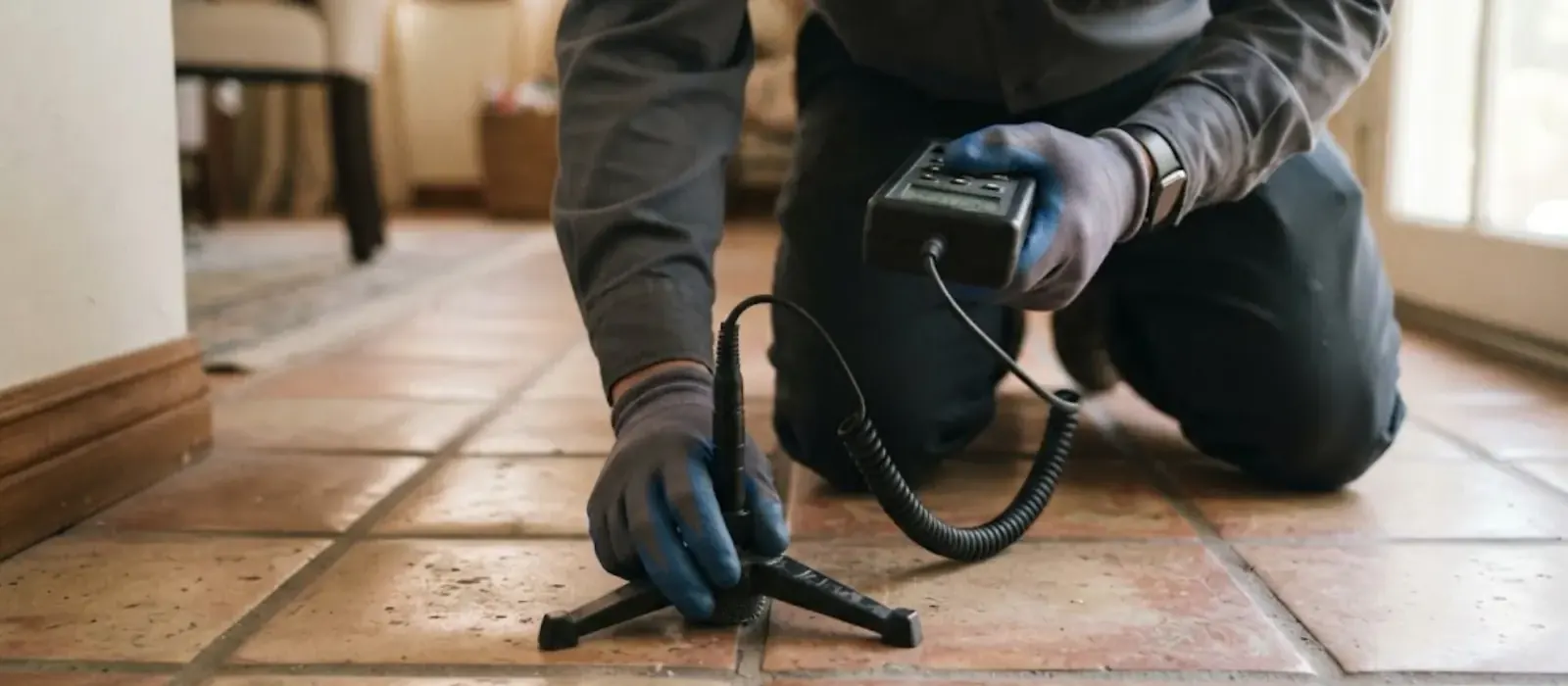
A moisture meter reads how wet the surface is, and a thermal camera shows cool, wet areas that do not match the rest of the wall. Listening gear can then pick up the sound of water escaping a pressurized line, which narrows the spot to a small area. The plumber usually opens a small inspection cut instead of removing a whole section of drywall, and that cut is easy to patch.
Photograph the stain with a coin or tape measure beside it today and again in a day or two. Photos show whether it is growing, and they back up an insurance claim if the damage is sudden.
Under the house and in the crawlspace
Some homes have a raised floor with a crawlspace beneath, and a leak there can run for months before anything shows indoors. Supply lines, drain lines, and the water heater feed all pass through that space. A leak can soak insulation and subfloor out of sight, which is why a damp crawlspace deserves attention even when the rooms above look fine.
Signs include a musty smell from floor vents, floorboards that bounce or buckle, insulation sagging between joists, and white mineral crust on the foundation wall. Standing water or a wet patch of soil under one run of pipe is a strong clue. Rodent activity and dust can mask a slow drip, so a look with a flashlight is not always enough.
Do not crawl in alone if there is standing water near wiring. Crawlspaces hold electrical lines, and wet ground and live current are a poor mix. The plumber can shut off and pressure test one section of pipe at a time, which isolates the leaking run without cutting into the floor above.
Drain leaks under a house are a different job from supply leaks. A cracked drain line often needs a sewer camera inspection to confirm where the pipe is broken, because it leaks only when water is draining and the ground may stay dry between uses.
Buried line leaks between the meter and the house
The pipe that carries water from the meter to your house is buried, and when it leaks, the first sign may be a bill, a soggy strip of yard, or pressure that sags at every tap. Soil hides the loss, and a leak can soak the ground for a long time without breaking the surface. Watch for sunken pavers, a crack that widens along a walkway, or a dark line in the lawn.
Finding the spot starts with the meter test above. If the meter runs with the house valve closed, the leak is outside. A plumber can then pressure test the line, trace its path with a locator, and use ground-listening gear to hear where water is escaping. A short, confirmed excavation fixes the leak, and when the whole line is worn, a water service line repair may cover replacing it.
Who owns what matters here. The state's plumbing contractor classification covers water lines from the owner's side of the utility meter to the structure, so that run is the homeowner's to fix. If water is bubbling up in the street or at the meter box on the city's side, call the city's after-hours water, sewer, and street emergency line at (909) 356-3805. That number is for the street side only. For anything between the meter and your house, call us.
Sprinklers, pools, and the meter box
Sprinkler and drip lines
The nearest long-record NOAA station, in Redlands, shows about 12.87 inches of rain a year in its 1991 to 2020 normals. June through September get near 0.1 inch a month, with roughly 25 days at 100 degrees or higher.
Irrigation runs hard through those months, so a stuck valve or a broken head hides inside normal watering. Run each zone one at a time with the house water off and watch the meter, and any zone that moves it by itself is the one to inspect.
Pool and spa lines
Pools lose water to evaporation, so a bucket test comes first. If the pool still drops faster than the bucket, the plumbing lines to the pump, filter, and spa can be pressure tested for leaks. A cracked shell or worn liner belongs to a pool contractor, and a plumber will tell you plainly which side of that line the problem is on.
Yard and meter-box leaks
Water pooling in the meter box or soaking the soil beside it needs a quick look at which side of the meter is wet. Do not dig around the box yourself. A leak before the meter is the city's to repair, and a leak after it is a household repair that a plumber can locate and fix.
Ways a leak gets located
| Method | Best for | Limit |
|---|---|---|
| Meter and shut-off test | Telling an indoor leak from an outdoor one | Shows that a leak exists, not its exact spot |
| Pressure test of an isolated line | Confirming that one pipe run holds or loses pressure | Needs that run shut off and capped |
| Acoustic listening | Pressurized pipes in walls, slabs, and soil | Traffic, irrigation, and appliances can mask the sound |
| Moisture meter | Ceilings, walls, and floors | Reads wetness, not where the water entered |
| Thermal camera | Warm hot-water lines and wet insulation | Reads surface temperature only, so it narrows the search without confirming it |
Most jobs use two or three of these together. The meter test points the plumber inside or outside the house, the acoustic and moisture tools narrow the area, and a pressure test confirms the line before anyone cuts or digs. That order keeps the opening small, and it keeps you from paying to repair the wrong pipe.
Once the leak is found, repair depends on where it sits. An accessible line can often be fixed during the same visit when parts are on hand. A leak under concrete is a slab leak repair job, and a split in a pressurized run may be handled as burst pipe repair. When leaks keep showing up in different places, a planned repiping job is worth a conversation.
What affects the price, and what your policy may say
- Access to the pipe: an open crawlspace is quicker than a wall finished with tile.
- Where the leak sits: inside a wall, under a slab, or in a buried yard line.
- How many tests the search needs before the leak is confirmed.
- Pipe material and size, which set the parts and the repair method.
- Patching and finish work after an inspection cut, and after-hours work at night or on a weekend.
Many homeowner policies cover sudden and accidental water damage, while the California Department of Insurance lists seepage, leaks over time, and wear as generally not covered. Read your policy exclusions, photograph the damage, and ask your insurer before repairs begin. A plumber's written findings on where the leak started can help that conversation.
Want your real number for your house? Call (909) 505-3225 and you hear a clear price before any work starts.
Questions about leak detection in Loma Linda
Yes. The line is answered 24/7, including nights, weekends, and holidays, and a leak that is flooding a room or running through the meter gets treated as urgent at any hour. Same-day appointments are offered when the schedule allows. While you wait, close the main valve, stay away from wet electrical areas, and photograph the damage for your insurer.
Turn off every faucet and appliance, read the meter, wait two hours without using water, and read it again. A changed number means water is leaving the pipes. Close the main valve at the house and test again to learn whether the leak is inside or in the buried line.
Often yes. Moisture meters, thermal cameras, and listening gear narrow the area first. When a cut is needed, it is usually a small inspection opening placed over the located spot, and it can be patched afterward.
The utility meter is the usual dividing line. Water problems on the street side belong to the city, while the line from the meter to your house is the homeowner's. If you are not sure where the water is coming from, call and describe it, and the plumber can help work out which side it is on.
Permit rules vary with the type of repair, so ask the Loma Linda Building and Safety Division before work begins. To check any plumber's licence, use the CSLB license lookup at cslb.ca.gov, which shows license status and disciplinary history.
Hot, dry months mean more irrigation and longer showers, and the nearest NOAA normals show about 25 days a year at 100 degrees or higher. A leak can hide inside that normal rise. Run the two-hour meter test with sprinklers off, and if the dial moves, the increase is not just the weather.
A small, accessible leak can often be repaired during the same visit when parts are on hand. Leaks under a slab, in a buried line, or behind finished walls may need a planned repair, and you hear the price before any of that work starts.
Find the leak before it finds your drywall
Call any hour about a hidden leak. You hear a clear price before work starts, and same-day appointments are available when the schedule allows.
Call (909) 505-3225Dispatched from Loma Linda
Crews head out from Loma Linda to the neighborhoods below and the towns around them.