How to Prevent Toilet Clogs in Your Loma Linda, CA Home
Most toilet clogs come from a few repeat habits. Here is how to stop them in a Loma Linda home, and how to tell a toilet clog from a sewer problem.
The quick answer: what stops most toilet clogs
To prevent toilet clogs, flush only toilet paper and human waste, use less paper per flush, keep a flat-flange plunger nearby, and fix a weak flush early. Those four habits prevent most backups.
A toilet clog is almost always a blockage in the trap built into the bowl or just past it. A sewer clog is further down the line and hits more than one fixture. Knowing the difference saves a lot of plunging.
What actually causes the clog
Most clogs start with something that does not break down. Wipes, even those sold as flushable, hold together in the pipe where paper falls apart. Cotton swabs, dental floss, hair, feminine products and paper towels catch on the rough walls of the trap and pile up.
Thick paper is another cause. A big wad flushed in one go can pack the trap before the water has enough force to push it through. Toilets with weak flushes, from a worn flapper or low tank water, make this worse.
A third cause is the toilet itself. A crack in the bowl, a loose flange or a bad wax ring can all slow the flush and leave a toilet that clogs every few weeks. If you keep plunging the same bowl, the fixture is telling you something that a plunger cannot fix.
Habits that keep the trap clear
Small routines beat any product on the shelf.
- Put a small trash can with a lid next to the toilet so wipes and floss go in the can.
- Flush twice for a heavy load instead of once with a mountain of paper.
- Teach children and guests that only paper goes down.
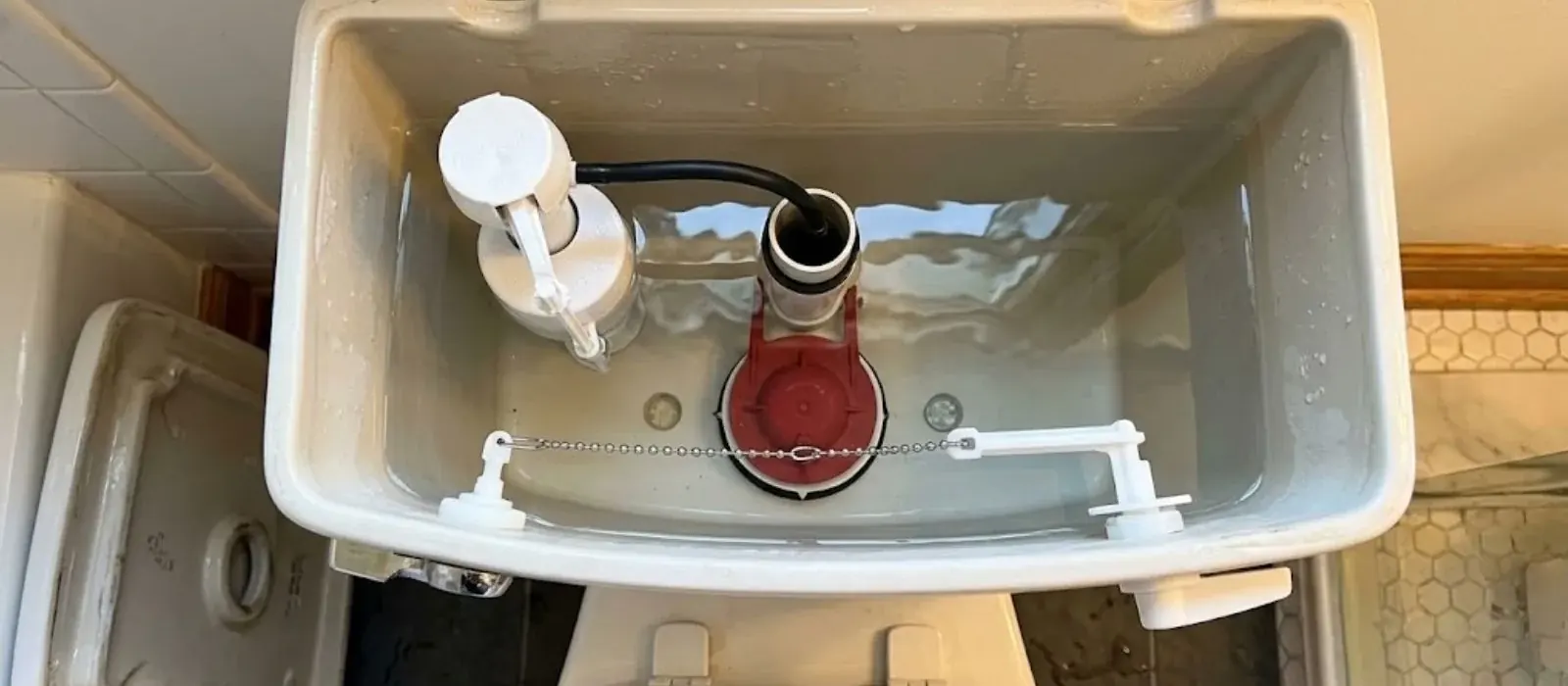
- Check the flapper once a year. If the toilet runs on after a flush, it needs attention, because a weak flush means a weak push.
- Keep the tank lid on and the water level at the fill mark inside the tank.
Skip the in-tank bleach tablets and chemical drain openers. They can damage rubber parts, and a drain opener that fails to clear a clog leaves a bowl full of harsh liquid that splashes on you and on the next person who plunges.
Choosing the right plunger and using it well
Not all plungers fit a toilet. The flat cup plunger meant for sinks seals poorly on a bowl. A flange plunger, with an extra rubber sleeve below the cup, fits the drain opening and pushes water through the trap.
To use it, put the cup over the drain so the sleeve sits inside it, press down gently to force out air, and then pump steadily for 15 to 20 seconds, keeping the seal. Add water first if the bowl is low, because the plunger needs water, not air. If the water drops, flush gently to see if it clears.
A closet auger, a short hand-cranked snake made for toilets, reaches a little further than a plunger. Feed it in slowly and stop if you feel it catch on something hard, since a forced auger can scratch porcelain.
Toilet clog or sewer clog?
| What you see | Likely source | Next step |
|---|---|---|
| One toilet clogs, others drain well | The toilet trap or its flange | Plunge, then auger |
| Toilet and shower gurgle together | The branch line or main drain | Stop using water and call |
| Toilet bubbles when the washer drains | Partial blockage in the main | Call a plumber |
| Water rises in the tub when you flush | Main line blockage | Stop all water use and call |
| Sewage in the lowest drain | Main line backup | Stay out of the area and call right away |
If more than one fixture is affected, stop using water. Running a washer or dishwasher feeds more water into a blocked line and pushes it into the house. A professional drain cleaning visit with the right cable or jet is the usual next step for a branch or main line clog.
When a homeowner can fix it and when not to
You can plunge, use a closet auger, and replace a flapper or fill valve with common hand tools. Wear gloves and eye protection, and lay towels down first.
Stop when you see signs the problem is bigger. Water that comes back after every flush, a toilet that rocks on the floor, a stain around the base, or sewage in a tub or floor drain all point beyond the bowl.
Pulling a toilet to look at the flange is a job some homeowners handle, but a damaged flange or a leak under the floor is repair work for a licensed plumber, and a toilet repair visit is the safer choice if you are unsure.
For larger work, California requires a contractor licence when a project passes the state's cost threshold or needs a building permit. The licence board has an online lookup where you can check a contractor before you hire.
Loma Linda local note: low-flow toilets and the city sewer
California-compliant toilets use a maximum of 1.28 gallons per flush under the state's CALGreen standard, which applies to new construction and certain additions and alterations. If your toilet was installed recently, it is probably a low-flow model, and that is a reason to be sparing with paper and to avoid wipes, since less water moves the waste.
In Loma Linda, the city owns and operates the wastewater collection system and handles sewer line maintenance. Wastewater is treated under a joint powers agreement with the City of San Bernardino at its water reclamation plant, then sent on for further treatment at the RIX plant. What that means for you is that a blockage in the street main is a city matter, while the pipe between your house and that main may be your responsibility.
The city pages do not spell out who owns the private lateral or cleanout, so ask the city before you assume. If several fixtures clog at once or a neighbor has the same problem, report it. A rental tenant should tell the landlord, since drain repairs usually start with the property owner.
Nearby towns, same habits
Homes and rentals in Colton, about 4.7 miles west of Loma Linda in a straight line, and in Grand Terrace, about 4.1 miles west, see the same repeat offenders: wipes, thick paper and weak flushes. We serve both towns, and the habits above work just as well there.
When to call
Call if a toilet clogs more than once a month, if you see sewage, if more than one fixture is affected, or if a plunger and auger do not clear it. Call when a toilet is leaking at the base too, since moisture under the floor can ruin the subfloor quietly.
The line is open 24/7, including nights and weekends. Call (909) 505-3225 and a licensed plumber will talk through what is happening, and you hear a clear price before any work starts.
Toilet clog questions
Not in most homes. They do not break apart like paper, and they snag in traps and lateral lines. The safest habit is to put every wipe in the trash.
A weak flush is the usual reason. A worn flapper, low tank water or a partly blocked jet under the rim can leave the bowl without enough force, so even small loads sit in the trap.
It is best to avoid them. If the clog does not clear, the bowl is full of caustic liquid, and a plunger can splash it on you. They can also harm older pipes and rubber seals.
If more than one fixture drains slowly, gurgles or backs up, the blockage is past the toilet. Stop water use and call a plumber.
Not by itself, but a 1.28 gallon per flush model gives less water to move waste, so wipes and heavy paper matter more. If yours clogs often, a plumber can check the flush strength and the flange.
Toilet keeps clogging? Call the 24/7 line
A licensed plumber can tell a toilet problem from a drain line problem, with a clear price before work starts.
Call (909) 505-3225Dispatched from Loma Linda
Crews head out from Loma Linda to the neighborhoods below and the towns around them.