Cleaning the Main Sewer Line in Loma Linda, CA: What Happens and Who Does It
The main sewer line is the single pipe every drain in your Loma Linda home shares, and cleaning it takes the right tool for the blockage.
What cleaning a main sewer line actually means
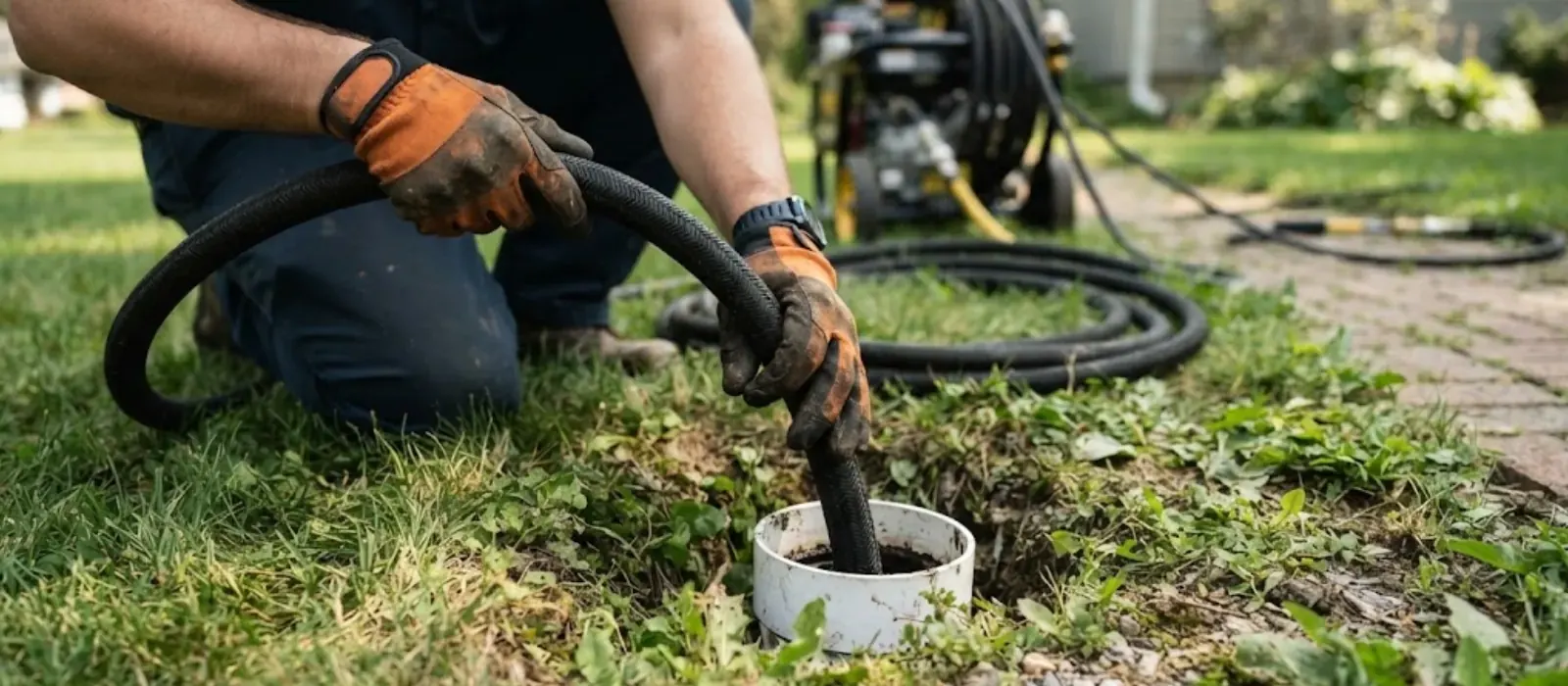
Cleaning a main sewer line means removing whatever is narrowing or blocking the large pipe that leaves your house and runs toward the sewer in the street. Grease, paper, wipes, and tree roots are the usual causes. The work is done from a cleanout, a capped fitting that gives a plumber straight access to the pipe.
Two tools do most of it. A motorized cable with a cutting head drives through the blockage and scrapes the pipe wall. A hydro jet pushes high-pressure water through a nozzle and washes the walls clean. Both are usually followed by a camera pass, so the plumber can see whether the pipe is clean, cracked, or sagging.
Cleaning treats the blockage. It does not repair a broken pipe. If the camera shows a crushed section or a joint that has pulled apart, the stoppage will return until that section is fixed.
Signs the problem is the main line and not one drain
One slow sink is a branch problem. When the whole house acts up together, the main line is the suspect. Look for these patterns.
- A toilet gurgles or bubbles when the washer drains or a shower runs.
- Two or more fixtures are slow or blocked at the same time.
- The lowest drain in the house, often a shower or a floor drain, backs up first.
- Water or sewage shows in a bathtub after someone flushes upstairs.
- A sewage smell comes from a floor drain or the yard near the cleanout.
If sewage is already coming up, the situation is an emergency, and the first steps are different. Stop running water, keep children and pets out of the wet area, and call. Do not run more water to see if it clears.
Find the cleanout before anyone arrives
A cleanout is usually a short pipe with a threaded cap, often near the house, along a side wall, or close to where the line leaves the property. Finding it ahead of time saves a plumber from guessing. Homes differ, so do not assume yours matches a neighbor's.
Do not open a cleanout under pressure. If the pipe is full and backed up, removing the cap can release sewage onto your hands and the ground. Look, photograph it, and leave the cap in place for the plumber.
Do not pour drain chemicals into a standing main line. They sit in the pipe, they burn skin, and the next person who opens the line has to work around them. Chemicals also do nothing to roots or a collapsed pipe.
Cable, jet, or camera first: choosing a method
The right method depends on what is in the pipe. A camera inspection first shows the cause, so the tool choice is not a guess. Many plumbers start with the cable to open a path, then follow with a camera.
| Method | Best when | Trade-off |
|---|---|---|
| Motorized cable | A soft or partial blockage, paper, or light roots | Opens a channel but can leave grease on the walls |
| Hydro jetting | Heavy grease, scale, or roots along the full pipe wall | Needs a pipe sound enough to take the pressure |
| Camera inspection | Repeat backups or a first-time stoppage with no clear cause | Shows the cause but does not clear it |
| Spot repair or replacement | A crack, offset joint, or sagging section is found | A bigger job that may need a permit |
You can read more about sewer line cleaning on the service page, and about what the camera shows on the sewer camera inspection page.
When a homeowner can help and when to stop
A homeowner can do a few safe things. Stop running water. Check whether other toilets and tubs are affected, which tells the plumber if it is the main. Photograph the cleanout area and any wet spots. Keep wipes and grease out of drains from now on, since wipes labeled flushable still tangle on roots and rough pipe.
A homeowner should not enter a cleanout pit, break open pavement, or run a rented cable machine into a line that is already full of sewage. Sewage carries bacteria. A cable that snags on a broken pipe can also tear it further and turn a cleaning into a dig.
Loma Linda local note: who owns what in the sewer system
The City of Loma Linda owns and operates the wastewater collection system and handles sewer line maintenance, according to the city utility documents. That means the public main under the street belongs to the city.
Treatment is handled by San Bernardino under a joint powers agreement. Flow goes to the San Bernardino Water Reclamation Plant for secondary treatment, then to the RIX plant, which uses percolation basins and ultraviolet treatment before water reaches the Santa Ana River. Loma Linda's service area supplied about 15 percent of the San Bernardino plant flow in 2025.
The city pages do not say where the city's responsibility ends and the homeowner's line begins. They are also silent on private laterals and cleanouts, so do not assume. If several houses on your street back up together, or the stoppage is outside your property, ask the city whether it is the public main. If only your house is affected, the blockage is more likely in your own line.
Neighbors in nearby cities sit under different rules. The sewer utility in San Bernardino publishes its own statement that the owner is responsible for the whole lateral, from the building to the main. That rule is San Bernardino's, not Loma Linda's, and it shows why the question is worth asking.
Costs and what changes the price
Several things move the price of clearing a main line, and none of them need a number to understand.
- How far the blockage sits from the cleanout, and whether a second access point is needed.
- Whether roots, grease, or a broken pipe is the cause.
- Pipe material and depth, which decide whether a jet is safe to use.
- Whether a camera pass is included in the visit.
- After-hours, weekend, or holiday work.
On insurance, the California Department of Insurance says homeowner policies generally cover sudden and accidental water damage and generally exclude seepage, wear, and maintenance. Read your exclusions and photograph any damage.
When to call a plumber and what to expect
Call as soon as more than one drain is affected, or any time sewage is coming up. The line is open 24/7. Curious what clearing your own line would take? Call (909) 505-3225 and the price for the cleaning and camera pass is stated before anyone starts.
Replacement of a sewer line is licensed work. The Contractors State License Board requires a license once a project hits its cost threshold or needs a building permit, and its public lookup shows a plumber's license status. In Colton, the city permit page states that replacing sewer lines requires a permit, so ask your own city before any digging.
Questions people ask about main line cleaning
Several fixtures draining slowly or gurgling at once is the clearest sign. A single slow sink is usually a local clog. If the lowest drain in the house backs up when you run a washer or flush upstairs, the main line is the likely problem and a plumber should clear and camera it.
A small, soft blockage near the cleanout is sometimes within reach of a careful homeowner, but the risks are real. Sewage is a health hazard, and a rented cable can snag a cracked pipe. If the pipe is full or the cause is unknown, call a licensed plumber.
Neither is better in every case. A cable opens a channel through a soft stoppage. Hydro jetting cleans the full pipe wall and handles grease and scale well. A camera shows which one fits, and an old or cracked pipe may not take high pressure.
Only if the cause was a blockage. Roots grow back and grease builds again. A pipe that is cracked, offset, or sagging will keep catching waste until that section is repaired.
The city owns and operates the wastewater collection system, which includes the main under the street. The city pages do not state where the homeowner's responsibility starts, so ask the city before deciding who pays. A camera pass can show whether the problem is on your side.
Whole house draining slowly? Talk to a plumber today
Call any hour. You hear a clear price for clearing and camera-checking the main line before work starts.
Call (909) 505-3225Dispatched from Loma Linda
Crews head out from Loma Linda to the neighborhoods below and the towns around them.