Hydro Jetting and Leak Detection in Loma Linda, CA: What Each Finds
Hydro jetting clears the inside of a drain, and leak detection finds water escaping a pressurized pipe, so they answer two different problems.
The short answer: one cleans drains, the other finds water loss
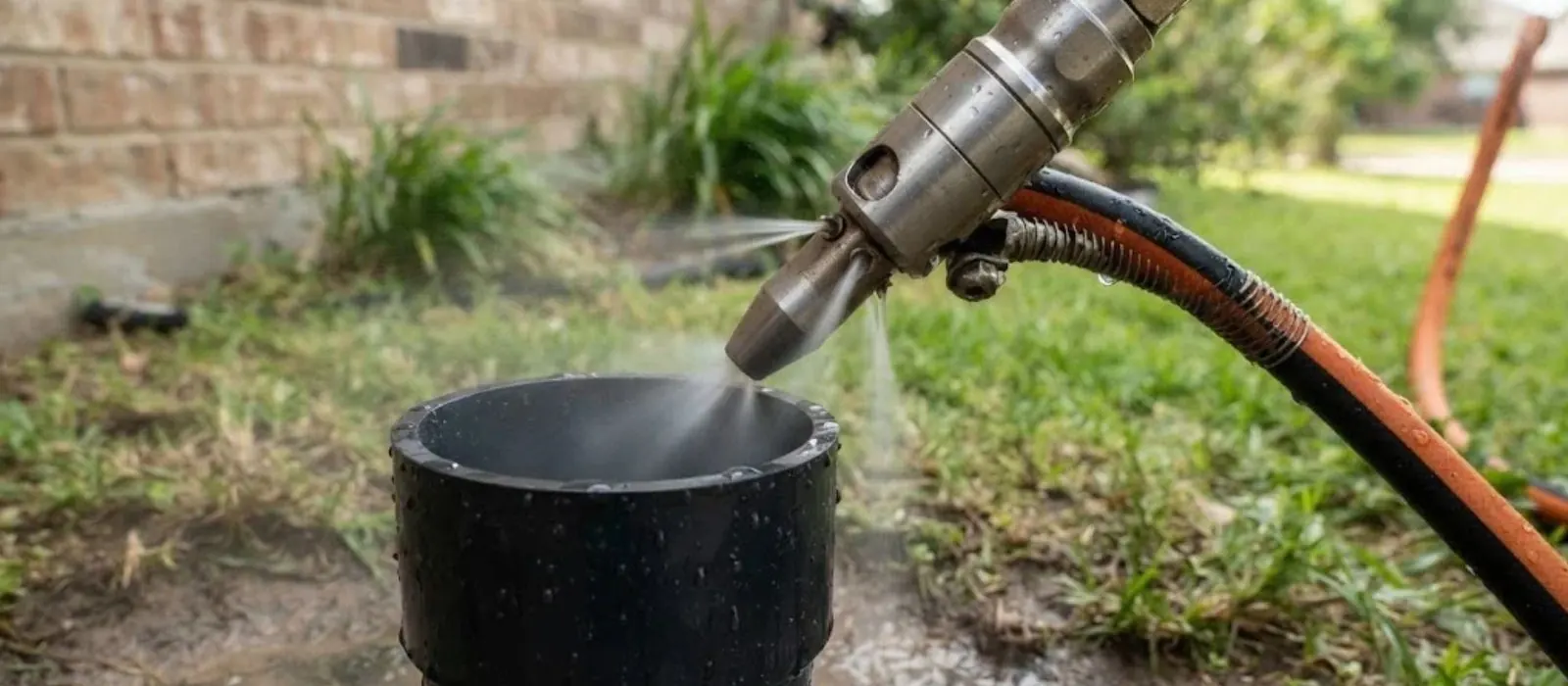
Hydro jetting is a drain tool. A hose with a special nozzle sends high-pressure water through a drain or sewer pipe and scrubs grease, scale, and roots off the walls. It treats backups and slow drains.
Leak detection is a supply-side tool. It finds where pressurized water is escaping from a pipe you cannot see, under a slab, in a wall, or underground. It treats a high water bill, a meter that keeps moving, a damp patch, or low pressure.
The two are easy to confuse because both involve water and pipes. The test is simple. If water is going out of the house too slowly, you have a drain problem. If water is going into the ground or walls when it should not be, you have a leak.
Signs that point to a drain problem
Use jetting thinking when the trouble is on the waste side.
- A sink, tub, or toilet drains slowly or backs up.
- A drain clears with a snake and clogs again within weeks.
- Kitchen drains smell greasy and clog repeatedly.
- Roots are suspected, such as when trees grow near the sewer line.
- Several fixtures gurgle or slow together.
A camera inspection often comes first, since it shows whether the pipe is coated, rooted, or cracked. The service page on hydro jetting explains the method in more detail.
Signs that point to a leak
Use leak detection thinking when the trouble is on the supply side, with pressurized water.
- The water meter keeps moving after every fixture is off.
- The water bill jumped without a change in habits.
- A warm spot appears on a floor, or a floor feels damp.
- Water sounds run when nothing is on.
- Pressure falls with no clear cause.
- A stain spreads on a ceiling or wall.
A leak does not always show. Water can travel along pipes or soak into soil before it appears anywhere. That is why finding it takes tools, not guesses, and why leak detection uses listening devices, pressure tests, and thermal imaging.
What each method can and cannot do
| Question | Hydro jetting | Leak detection |
|---|---|---|
| What problem does it address | Blocked or coated drain pipes | Water escaping pressurized pipes |
| What it finds | Nothing directly, it cleans | Location of a hidden leak |
| What it fixes | The blockage | Nothing directly, it locates |
| Where it works | Drain and sewer lines | Supply lines, slab, wall, yard |
| Main limit | Cannot seal a crack or hole | Cannot clear a clog |
| Follow-up often needed | Camera, then repair if damaged | Repair at the located spot |
Neither method repairs a pipe. Jetting clears the blockage and leaves any crack as it was. Leak detection points to the spot, and then a plumber repairs or replaces that section.
When one tool can hurt the other problem
Jetting a pipe that is cracked or collapsed can make matters worse. High-pressure water can wash soil away from a broken section or push through a weak joint. That is why a camera look before jetting is wise in an older line. If the camera shows a break, the right answer is repair, not more pressure.
Leak detection does not help a clog. Running a pressure test on a drain line does not tell you where a blockage sits. If someone proposes it for a slow drain, ask what the test is meant to show.
Some homes have both problems. A cracked sewer line can leak wastewater into the soil and also catch roots, so water loss and backups show up together. A plumber who knows both tools can tell which comes first.
Loma Linda local note: city lines and older tracts
Where the problem sits matters. Here the city runs both the water supply and the wastewater collection system. For trouble on the street side, such as water bubbling up at the curb or a stoppage in the public sewer main, the city posts an after-hours number for water, sewer, or street emergencies, (909) 356-3805.
That line is for the public side. A leak inside your walls or a clog in your house line is a private problem.
About 42.5 percent of Loma Linda homes were built before 1980, based on Census estimates for 2020 to 2024. Older tracts mean older supply lines and drain pipes, so both kinds of trouble are plausible. It is worth asking whether your pipes are original before choosing a method.
The city audits water loss in its own pipes each year, and its latest planning document puts that loss at 5 to 14 percent of production for 2021 through 2024. Those gallons leave the city system. A leak at your home is a separate matter on your side of the meter.
How a plumber decides which one to use
A plumber starts with questions. Where is the symptom, and when did it start? Is the meter moving? Does the problem follow water use or a particular fixture? The answers narrow things quickly.
Then comes a look. A drain symptom calls for a camera on the drain. A water-loss symptom calls for a meter check, a pressure test on the supply, and listening devices. Only then does the plumber choose a tool. Beginning with a tool and then looking for a problem wastes time and money.
A neighboring city can differ. The water utility in San Bernardino says in its customer FAQ that the customer owns the underground service line from the property to the meter. In Redlands, the utility customer service line takes meter and street leak reports. Each utility draws the line in its own place, so ask yours.
What homeowners can do and what they should not
A homeowner can read the meter, watch for dampness, run a bucket test on a slow drain, and photograph stains. They can turn off the water at the main if something is actively flooding.
A homeowner should not run a rented jetting hose. The pressure can injure skin and damage pipe. A homeowner should not dig for a leak, because buried lines carry water, gas, and power. Call 811 before any digging. A gas smell means leave the building and call SoCalGas at 1-800-427-2200 or 911 before anyone else.
Cost drivers and when to call
Several things shape the price of either service.
- Pipe length, depth, and material.
- How hard it is to reach the cleanout or the leak area.
- Whether a camera or a pressure test is needed first.
- Whether concrete, drywall, or landscaping must be opened afterward.
- After-hours or holiday work.
Policies differ on water damage, with sudden and accidental events treated differently from slow leaks and wear, so ask your insurer and take photos. To get a figure for your property, call (909) 505-3225, and a clear price comes first for whichever service fits. Calls are taken around the clock.
Questions about jetting and leak detection
No. Jetting cleans the inside of a drain. A camera used with it can show a crack or break in the pipe, but finding leaks in pressurized supply lines takes listening gear, pressure tests, or thermal imaging.
No. It locates the leak so the repair is targeted. A plumber then repairs or replaces that section of pipe.
It depends on the pipe. A sound pipe takes jetting well. A cracked, thin, or collapsed one can be damaged. A camera look first tells you which you have.
Possibly both, but start with the water bill. A moving meter with every fixture off points to a leak. Then deal with the drain separately.
Call the city's after-hours number, (909) 356-3805, for anything on the public side. For anything inside your property line, call a licensed plumber.
Drain trouble or water loss? Call and find out
Call any hour. A plumber can pick the right method and give you a clear price before work starts.
Call (909) 505-3225Dispatched from Loma Linda
Crews head out from Loma Linda to the neighborhoods below and the towns around them.