High Water Bill in Loma Linda, CA? How to Test for a Leak With Your Meter
A meter that keeps moving while every fixture is off is the clearest sign of a hidden leak, and you can check it yourself in a few steps.
The meter test in plain steps
If your water bill jumped and you cannot explain why, a meter test tells you whether water is moving when nothing should be using it. It takes no tools. If the meter shows flow with every fixture off, water is going somewhere, and a leak is the likely reason.
- Make sure no one is using water. Close all faucets, and stop the dishwasher, washer, ice maker, and irrigation timer.
- Find the water meter, usually in a ground-level box near the street or property line. Lift the lid carefully and watch for insects.
- Look for the low-flow indicator, a small triangle, star, or wheel that turns when any water moves. Many meters have one.
- Read the main dial and write down the numbers. Take a photo too.
- Wait without using any water. The EPA suggests a two-hour period with no water use.
- Read the meter again. If the numbers changed, or the low-flow indicator was turning, you probably have a leak.
If the indicator spins at the first look, you do not need to wait. Water is already moving.
What a moving dial means and what it does not
A moving dial means water is passing the meter. With everything off, it means some water is flowing that you did not account for. That could be a leak, but it could also be a running toilet, a dripping hose bib, a softener or irrigation timer cycling, or an ice maker refilling.
A stationary dial does not always clear you. A leak may be small enough that the meter hardly moves in the wait. It can also be intermittent, such as a fixture that leaks only when pressure is high at night. The test is a screen, not a diagnosis.
Different meters look different. Some have digital readouts, and some show leak flags. If yours does not look like the description above, ask the utility how to read it. Do not guess.
Rule out the easy causes first
Many bill spikes come from fixtures, not buried pipe. A toilet flapper that leaks can waste water with no sound. Put a few drops of food coloring in the tank, wait without flushing, and look at the bowl. Color in the bowl means the flapper is leaking.
Check hose bibs, under-sink connections, and the water heater relief valve line for drips. Look at the irrigation system, since a stuck valve or broken head can run for days. Walk the yard and look for soggy ground or unusually green patches.
If you find a leaking toilet or faucet, fixing it may end the spike. A faucet or toilet repair is usually simple, and a plumber can do both on one visit.
If the meter still moves, narrow it down
Shut the main valve at the house if you can locate it, and watch the meter again. If the meter stops, the leak is inside your property between the house valve and the fixtures. If the meter keeps moving with the house valve closed, the leak may be between the meter and the house, such as in the service line.
That one test splits the problem into two places. It also tells you who might be responsible. A plumber doing leak detection can then use listening equipment and pressure tests to find the exact spot.
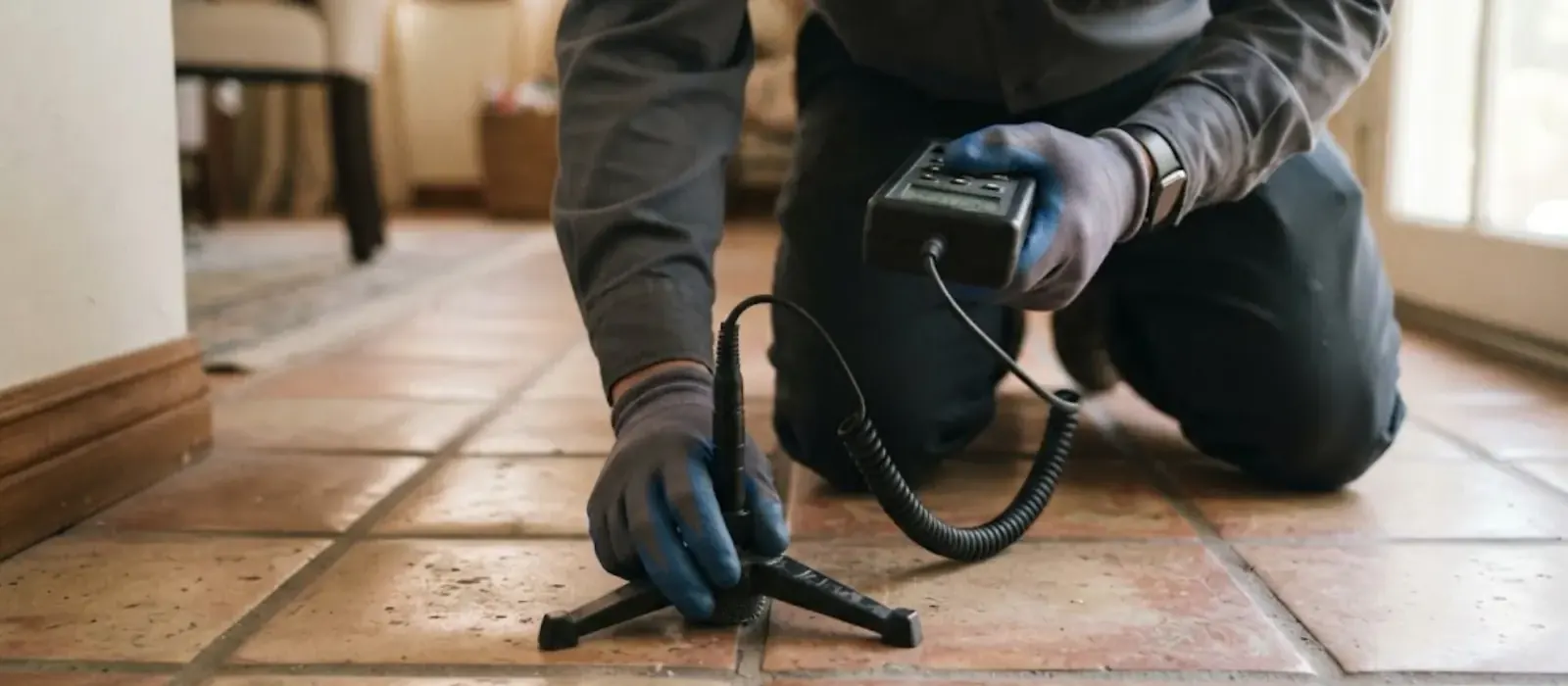
Signs that suggest the leak is under the floor include warm spots on a tile floor, the sound of running water when everything is off, and damp carpet near an outside wall. These are the classic slab leak signs, and slab leak repair covers how those are found and fixed without tearing up an entire floor.
Reading the meter test result
| What you see | What it suggests | Next move |
|---|---|---|
| Dial still after the full wait | No steady leak, or a very small one | Check the bill period, toilets, and irrigation |
| Dial moves, stops when house valve closes | Leak inside the home | Check fixtures, then call a plumber |
| Dial moves with house valve closed | Leak between meter and house | Call a plumber for leak detection |
| Dial moves only when a toilet tank refills | Running toilet | Replace the flapper |
| Dial moves only at certain hours | Irrigation or timed appliance | Check timers and schedules |
Loma Linda local note: billing, meters, and city water
Your water comes from a municipal retail provider, the City of Loma Linda Water Department. Billing questions go to the city Finance Department at (909) 799-2845, open Monday through Thursday. For a leak on the street side of the meter, the city's after-hours emergency number is (909) 356-3805.
The meter belongs to the utility, not to you. The city pages do not map the handoff point between utility and homeowner, so get that answer from the city before you dig, replace a line, or open the meter box. Do not tamper with the meter or its valve.
The city also runs an annual water loss audit on its own system. Its 2025 plan reports losses between 5 and 14 percent of production for 2021 to 2024. That is loss inside the city system, not on your property, so a high bill at your address still deserves a check on your side.
Neighboring utilities and a note on billing periods
Not every nearby city works the same. Colton lists its own billing and customer service number and its own after-hours line, and the policies on meter-side leaks are Colton's to state. If you live near a city line, check which utility actually sends your bill.
Read your bill for the billing period, not just the total. A two-month cycle can hide a short burst of heavy use, such as filling a pool or running irrigation during a heat wave. Compare the same period last year to see whether the jump is a leak or a season. Highland residents can ask their own utility the same question, and we serve Highland and nearby towns.
When to call a plumber and what drives price
Call when the meter test shows flow and the easy causes are ruled out, or when the bill stays high with no explanation. A plumber can confirm the leak, find it, and give options. Plumbers answer around the clock, holidays included.
Price depends on where the leak sits, how deep, what surface covers it, the pipe material, and whether the work is after hours. A leak under a slab or in a buried line may need a permit, and rules vary, so the Loma Linda Building and Safety Division can tell you what applies.
Coverage for water damage depends on the policy, and slow leaks are the usual sticking point, so ask your insurer and photograph everything. If you want the actual cost for your leak, call (909) 505-3225 and hear a clear price before any digging or opening of walls. The EPA notes that a family of four using over 12,000 gallons a month may have a serious leak.
Questions about high bills and leak tests
The EPA suggests reading the meter before and after a two-hour period when no water is used. If the reading changed, you probably have a leak. A spinning low-flow indicator can show a leak right away.
It may be under a slab, in a wall, or in the buried line between the meter and the house. Closing the main valve at the house and rereading the meter tells you which side. A plumber can then locate it with listening gear.
Yes. A flapper that does not seal can leak constantly and silently. Food coloring in the tank shows it in the bowl.
Yes. Hidden leaks add water volume, and the bill follows the meter, not what you see. That is why the meter test is useful.
The city Finance Department lists a billing line at (909) 799-2845. Ask the city where its responsibility ends and yours begins, since the city pages do not spell that out.
Meter still moving with everything off?
Call any hour. A plumber can pinpoint the leak and give you a clear price before work starts.
Call (909) 505-3225Dispatched from Loma Linda
Crews head out from Loma Linda to the neighborhoods below and the towns around them.